The Ninth Circle of Hell

Every time someone asks me why, with all my flight time and qualifications, I haven’t gone on to an airline job, I just think about stories like this one. Keep in mind, Sam left behind a city he loved, picked up his whole life and moved across the country for this job. All I can say is, I would not have handled the day’s events as diplomatically as he did.

I’ve always said that life is too short to do something you hate all day long. No offense to those of you working in the trenches at a regional or major, because I have the utmost respect for the hard life you folks are leading, but a Part 121 flying job is just about the perfect definition of “something I’d hate”. I swear, if Dante Alighieri was alive today, the Inferno would be set at a domestic airline.

To add insult to injury, the everyday risks to one’s career at a Part 121 airline are not insignificant. Medical certification. FAA enforcement action. Bankruptcy and mergers are but two of the ways one’s seniority (and paycheck) can go from 60 to zero in a heartbeat through no fault of your own. Ugh. The airlines even have their own version of purgatory. It’s called “furlough” and can last what feels like an eternity.

Most of the former instructors I’ve met over the years look back on their teaching days as something they simply had to endure in order to get a “real” job in the aviation world. I am tempted to give them the benefit of the doubt and chalk it up to the repetition of working with one primary student after another. But the truth is, many of those folks were simply not any good as instructors. They got out of it what they put into it: not much. I feel bad for them, because they’re always looking toward the “next thing” to make them happy. When they’re at an airline, they’ll look toward that upgrade, or the next aircraft, never satisfied with where they are.

I don’t mean to suggest that Sam falls into this category. He seems to be taking the bumps and bruises with a lot more grace than I could ever hope to have in that position. But I have a hard time getting past the fact that, without exception, every single retired airline pilot I’ve ever met has given me the same piece of advice: stay away from the airlines. In what other field would one get such an overwhelming vote of no-confidence from the industry’s most successful veterans?

Come to think of it, I’m not sure why CFIs are so looked down upon. I probably made twice as much money as Sam did in 2007, and worked fewer hours flying more interesting aircraft to boot. The highest performance aerobatic airplanes in the world. Historical, fully restored open cockpit biplanes. The latest in composite glass-panel aircraft. Warbirds. Experimentals. Turbines. Formation flying. The list of aviation jobs out there is pretty long, and I’ve had the good fortune of working many of them. And I choose when and where I work, as well as who I fly with.

The allure of the airlines is a mystery to me. It’s like the ninth circle of hell, except in this version everybody is clamoring to get there.

Getting Back Into Flying

I received an inspirational email from a reader the other day. I hope he won’t mind if I quote a bit of it here, because it brings up a topic which has been on my mind lately.

Even though I got a six-year head start on your ticket, and have even gotten a bit of action in the box (Citabria or Stearman driving), my 300 hours is nothing compared to your 3000! The demands of home ownership and $155/hr rates on 172s put a lot of dust on my logbook, and I let my currency lapse–a dangerous thing, I know, since many pilots never pick it up again once they hangar their medical for the first time.

But thanks to your witty and inspiring blog, I renewed my 3rd Class last week and just today finished my BFR! Yee haw…back in the saddle.

I’m glad I was able to inspire you to get back into flying! The magic never goes away, there’s always something new and exciting in aviation. The trick is just to find it.

Many people fall away from aviation because unless they’re pursuing a professional career as a pilot, once they have the core ratings and certificates, there’s not much of a reason to go fly. You can only eat so many $100 hamburgers before the “new” factor wears off and the cost/benefit ratio starts to tilt in the wrong direction. It’s especially hard if you own a home or have a family. The rising cost of fuel and insurance don’t help.

I’ve found several ways to keep aviation interesting. One was to fly for Angel Flight West. Let me just say it’s the most rewarding flying you’ll ever do; helping those in need while getting your aviation fix can almost be a guilty pleasure. And it will take you to airports you would not otherwise have had a reason to visit. Your horizons will expand in many ways. The direct expenses are also tax deductible.

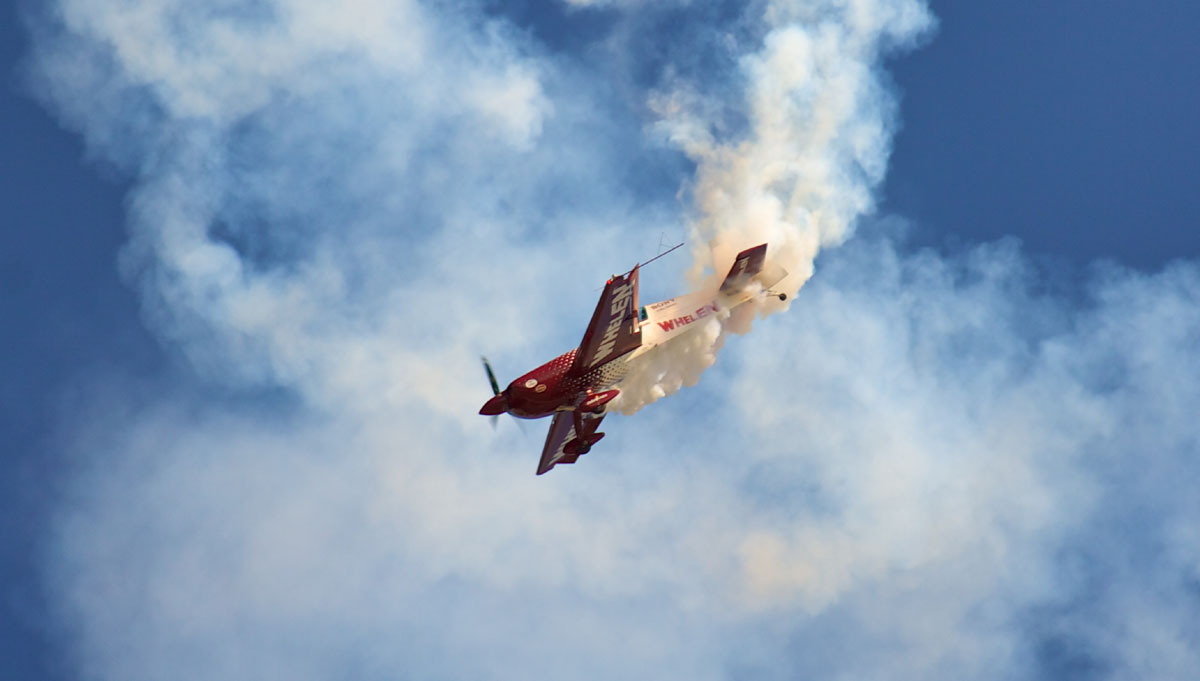
Another great idea was aerobatics. It improved my experience and skill levels immensely, not to mention bringing me in touch with an amazing group of aviators. It’s also a humbling thing to watch the great aerobatic pilots fly. They aren’t just the Unlimited competitors either. There’s a guy who flies a stock Great Lakes in Intermediate and he’s as entertaining to watch as any airshow. And as you progress through the ranks, there’s always a new generation of pilots coming up behind which need mentoring and coaching.

Aerobatics is a quest for the perfect flight — something which is impossible. Yet we continue to strive for that perfect roll, flawless spin, constant-radius loop, etc. Side benefits include an ability to recover from unusual attitudes with speed, accuracy, and a cool head. This is a boon to overall flight safety.

Formation flying is another burgeoning genre. The stick-and-rudder skills are almost secondary to the sense of camaraderie which develops from trusting another pilot with your life, and having them do the same with you. In formation flying, you’ll often find highly experienced pilots, interesting experimental aircraft, and a higher level of discipline than you might encounter with an average group of aviators.

The cost of flying has been a tough nut to crack for a long time. And it’s not getting any easier. The only thing I can say for sure about the cost of flying is that it will be more expensive in the future than it is today. Ten years from now we’ll look back on what we’re paying today and wish it could be that cheap. Hard to believe, but it’s always been true in the past.

OK, so that doesn’t help you finance your fix. There are things you can do to fly “on the cheap”. One is own an aircraft in partnership. I’ve always been a fan of buying less than you can afford. This is important because you want to own the plane rather than have it (financially) own you. Having said that, a flying RV-3 can be had for ~$25-30,000. That’s a 200 mph aerobatic airplane, and with an Experimental-Homebuilt airworthiness certificate, you can do the maintenance yourself. Split it with another pilot and the indirect costs are cut in half. It’s a little more complicated than sole ownership, but it certainly costs less.

Of course, the cheapest way to fly is to get paid for it. Instruction, banner flying, skywriting, pipeline patrol, towing gliders. There are a lot of great full or part-time jobs out there. Even if you just tow gliders a couple of weekends a month, at least it’s something which keeps you in the cockpit and in touch with the vibrant aviation community.

Anyway, I didn’t mean to get off on a dissertation about flying. Well, ok, yes I did. It saddens me to see people leave the flying populace, so it’s a good day when someone writes to say they’re getting back into the game.

You worked hard for your ratings and certificates. You knew it would be a tough endeavor. What nobody told you is that it’s just as challenging to keep that spark going when you’re through. But in the end, it’s well worth it. You’ll see!


Switch to our mobile site