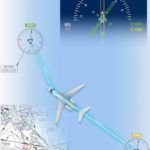
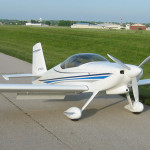
With the advent of the Glass Age, I’ve been seeing more and more pilots question the need for traditional needle/ball/airspeed instrument skills. Why bother to learn the technology of yesterday, they ask?
On the surface, this question makes sense. After all, who even manufactures aircraft with non-glass panels anymore? Heck, even the venerable Legend Cub is being built with a Dynon D10A these days. At my home field, we have a Waco UPF-7 (a 1930’s era open-cockpit biplane) with a Garmin glass panel. It looks more like you’re sitting on the bridge of the starship Enterprise than in a barnstormer ready to dust crops.
There’s no doubt that glass panels have fewer insidious failure modes than analog instruments. Instead of an attitude indicator that slowly rolls over (possibly taking the pilot with it), you get a giant red “X” leaving no doubt about the quality of the AHRS data.
And, lest we forget, many of the pilots who balk at an six-pack instrument panel probably don’t see one that often. They fly newer airframes, experimentals, turbines, and read industry publications that rarely even show a non-glass instrument panel. Out of sight, out of mind. So the question is a good one, but my answer may surprise you.
In my opinion, the traditional analog instruments are not obsolete, if only by virtue of the fact that out of the 200,000+ GA aircraft in existence, probably 90% of them have the older style panel. These airplanes are mostly certificated in the Normal category, and it would be neither cost effective or legally possible to put newer style instrument panels into those aircraft at the present time.
Of course, if you have an RV-X and only plan on flying that airplane and it’s got glass and you can fly it proficiently (including partial-panel, whatever that may look like in your ship), then there is no need to be able to fly with a turn coordinator, altimeter, and airspeed indicator.
On the other hand, when I train students to fly IFR in glass airplanes like the SR22 and Columbia, I ensure they can fly a traditional six pack as well via simulator training. There are several reasons for this:
- I want them to be a complete instrument pilot able to fly more than just an Avidyne or G1000
- Second, I want them to understand the way analog instruments work since there are analog instruments even in those glass aircraft, and they have different failure modes and different scans than an AHRS-based system
- Third, it’s harder to go “back” to analog instruments than it is to go “forward” to glass panels if you’re already a rated and experienced pilot, so I want the heavy lifting to be done while we’re already doing the heavy lifting: during primary instrument training.
I disagree with those who feel instructors are anti-GPS, anti-glass, attached to older technology, or provide unrealistic failure modes for no good reason. I know none who have that attitude. On the other hand, we often turn those devices off or direct a student’s focus elsewhere because it’s necessary for training. If we don’t push your workload to the breaking point, fail instruments and radios, etc. then we’re not doing our job.
Anyone can fly IFR when everything’s working. I’ve seen pilots who aren’t even instrument trained do it. But when you’re on one engine or partial panel in the clouds, a passenger is airsick, you need a bathroom break, the fuel is getting low, it’s night, and you’re tired, that’s not the time to find out how well you perform when stress is high. That’s why we push you hard. If you ever have a bad day and come out the other side in one piece, you’ll understand that.
“Riding the range once more, toting my old Pitts S-2B…”
Doesn’t quite have the same ring, does it? No matter. It was so nice taking the Pitts up today — I made two practice flights at the Blockhouse, concentrating on the Intermediate Known sequence for the upcoming season. It’s a bit tougher than last season’s sequence. The total K value (difficulty) is about the same, but this year it’s front loaded with harder figures, while at the end of the sequence the K values drop off significantly.

My practice strategy seems to differ from most aerobatic pilots. For whatever reason, most pilots begin by working with individual figures. On the surface this seems like a logical building-block approach. However, I prefer to run the new sequences all the way through until I can do them without any hard zeros. My reasoning is that a beautifully flown sequence is of little value if you zero most of it because you end up going the wrong direction or misread the card. Also, by the time the sequence can be flown properly, it should be clear which figures need the most work.
Let’s just say I have a long way to go before this is ready for public consumption. I’m trying to get ready for the Copperstate contest in Arizona, which will hopefully tune me up enough to benefit from a training camp in Borrego so that when the California season begins at Apple Valley, I will at least have a fighting chance. Last year, I didn’t fly for the whole season. Then I had one practice flight to prepare for the AcroFest. In case you were wondering, I do not recommend that training regime.
Anyway, back to the present. As usual, my 45s are shallow going up, steep going down, and I have to recalibrate my sense of the aircraft’s energy state going vertical. In other words, I keep torquing out of push humpties and other such maneuvers because I’m spending too long on the upline and running out of energy. I’m sure my rolls aren’t centered on the appropriate lines, either.
These things always happen in the off season. It’s almost as if I have an internal mechanism which falls out of adjustment after a period of inactivity. The frustrating thing is, I’ve been flying every day, and flying the Pitts a lot, too. But it’s primarily been demo flights, checkouts, advanced spin training, rides, and other non-competition stuff.
I haven’t even started working on rolling turns or getting my snap rolls back in order. All day long my snap rolls had an extra 200 degrees of rotation before I could get them stopped. But that’s okay. I’m glad just to be up there, zooming through the sky without a care in the world.
In honor of my new focus on not sucking this season, here are a group of pilots who definitely don’t stink: The Four Horsemen. This team still flies, but now it’s down to two Mustangs and they’re simply called “The Horsemen”. This video clip is well edited, and best of all, there’s no narration from an air show announcer. I’m not a big fan of announcers in general, but in this case it would be outright sacrilege. When a quartet of Mustangs is in the air, an announcer — whoever he may be — should just be quiet and let the sound of those Merlin engines speak for itself.
But that’s just my opinion.
Now is this a sweet looking pair of machines or what? A 1993 Pitts S-2B and a 2008 Honda Accord Coupe in matching paint:
I had the opportunity to get back into the Pitts yesterday and when I saw the two of them together I had to take a picture. It’s so rare that both the car and the plane are clean at the same time.
I was out at CNO to take Dan for a flight. His flight review (an FAA-mandated recurrent training requirement) was due and I owed him a favor for ferrying me out to Borrego last fall. I had needed to get out there to retrieve the Pitts after the Acrofest. I was the Contest Director for that competition. And a competitor. And a judge. And… I’ll never do that again. It was a crazy time, even by my standards.
Anyway, Dan wanted to try some advanced spin training as part of his flight review, so we focused on flat and accerated spins modes. After that, I went up for a solo flight to work on the 2007 intermediate known sequence. I’m trying to get an early start on preparing for the upcoming competition season.
The 2007 season was basically missed by all of us at Cloud Dancers because the airplane was undergoing a particularly heavy maintenance interval which lasted for most of the spring and summer. The timing was unfortunate, but after the aircraft came off leaseback it only made sense to get it into good working order. The wings were off, the prop was overhauled, fabric & paint were touched up, the top end was overhauled, and she was cleaned, rigged, inspected, and so on.
When I got back to Chino, I spent some time just shooting landings in the pattern. It’s such a blast to go from 1300′ AGL to zero in about 15 seconds. The airplane pretty much climbs at the same rate. I had forgotten how much sprightlier the S-2B is when flown solo vs. with two people on board. Losing that 200 lbs up front really makes a difference!
I’ve been doing a fair bit of Pitts flying lately, but most of it has been dual in an S-2C owned by one of my recent Part 61 private pilot grads. This airplane was originally owned by a good friend from the aerobatic competition circuit named Reinaldo. The person Reinaldo sold it to installed a wicked six-camera video system and sold it again shortly thereafter, leaving my student as the lucky beneficiary of this upgrade. Here we are preparing to start up during a recent flight:

Today, a bit of a rant — for which I will apologize in advance, my friends.
Flying is just about the only avocation I can think of where people can be found spending their free time at work by choice.
Think about that. In an office environment, folks typically get to work no earlier than necessary. Likewise, they leave as soon as possible when their work day is over and would never even entertain the idea of hanging out at the office on their day off.
But in aviation? It’s the polar opposite. At the end of a long week spent at the airport, they’ll spend their day off… at the airport. This is a major shift in motivation from the average workplace, and it contributes to a positive attitude and happy demeanor there.
Imagine an office building where everyone inside couldn’t wait to get to work in the morning. It would be a much different place, wouldn’t it?
Perhaps that’s why I don’t understand the disparaging attitude many people harbor toward instructing. It is widely viewed within the aviation industry as a bottom-rung starter job which must be endured in order to get to a “real” flying gig. And I suppose if that’s all you make of it, if that’s all you put into it, then that’s what it’ll be.
Here’s one instructor’s take on it:
Here’s the way a flying career works.
1) A person wants to become a captain of a big airliner and make lots of money
2) To do that, s/he need to be the first officer of a big airliner
3) To be hired into a major airline, s/he needs to build a bunch of jet time, so s/he works for a regional airline for a painfully low salary
4) To be hired at the regional airline, s/he needs a bunch of flying hours
5) To get those flying hours without paying for them, s/he becomes a flight instructor - that way the student pays for the hours
6a) Because the purpose is to build hours and not to make real money, flight instructors, in general, don’t get paid much at all (e.g. $11/hr in many places)
6b) Because most flight instructors actually want to work for an airline, they leave instruction as quickly as possible, so there are very few truly experienced flight instructors around
6c) Because these flight instructors don’t care what they make, they depress the entire instruction industry - it’s hard for anyone to charge more
Keep in mind this was written by a CFI. He goes on to wonder if the change in Part 121 mandatory retirement age will “destroy the short-lived increase in pay that I’ve seen for CFIs, now that the existing CFIs won’t be able to find airline jobs and will probably be stuck being instructors”.
Stuck? Please. Life is what you make of it. Just because instructing is a low-cost way to build hours doesn’t mean that’s all you can get out of it. There are float planes, glass panels, helicopters, turboprops, and a hundred other specialties out there to be mastered. If you want to be just another guy teaching primary students in a beat up Skyhawk, be my guest. But there’s so much more out there if you just have the vision, work ethic, and patience to pursue it.
I’ve got news for you, buddy: some of us actually enjoy instructing. Some instructors specialize in high performance aerobatics, formation flying, experimentals, warbird transitions, antiques, biplanes, tailwheels, and other such interesting airplanes. That’s what I do. I might fly a Pitts one day, a Columbia 400 the next, then a 1928 TravelAir, then an Extra 300, then an RV-6 or a Harmon Rocket. I coach aerobatic competitors, ferry aircraft, fly formation, and get paid for all of it.
I get to be home at night. I set my own schedule. And I charge whatever I want. There are very few instructors with the hours and credentials to gain insurance approval on these aircraft, so for the most part I’m in the driver’s seat.
It’s really a shame that those who teach primary students (poorly) for a couple hundred hours and simply look at their CFI time as some trial they must endure to get a “real job” are considered to be in the same category as CFIs who’ve spent many years honing their craft.
I’ve cleaned up the messes left by countless CFIs whose instruction was criminally poor, unprofessional, and incomplete. I say good riddance to those CFIs. As far as I’m concerned, the airlines can have them.
The ironic thing is that aviators with that attitude aren’t going to be happy when they reach that Part 121 job. They’ll decry the pay, the hours, the equipment, and look ahead to the next thing. The next plane, the upgrade to the left seat, the move to a “major” airline. We’ve all met people like that. The challenges of instructing don’t sit well with these types.
Make no mistake about it. The starting pay can be poor, the conditions rough, the hours long. In many ways instructing is like flying for a regional, come to think of it. The difference is that instruction allows you to play a pivotal role in a life-changing event for a person; you get to shepherd them toward the fulfillment of a dream which probably hearkens back to their childhood. How many jobs let you do that?
One final note about primary instructors, as they are probably the least respected of the CFI ilk. The longer I instruct, the more I’m convinced that primary instruction is one of the most difficult (and potentially rewarding) jobs a CFI can pursue. It’s a major undertaking to transform a civilian who doesn’t even know how to open the door of an aircraft into a pilot with sufficient knowledge of aerodynamics, navigation, aircraft systems, emergency procedures, airspace, meteorology, aviation law, aeromedical factors, etc. to safely operate that aircraft with passengers aboard.
I think it’s high time that CFIs — especially the career instructors — got the respect and recognition they deserve.
It’s so rare to get true winter weather here in Southern California. But as Lesley always says, it never fails to rain on opening night, and last night was no exception. Boy did it pour!
I nearly broke into a Gene Kelly-esque dance all the way down Avenue of the Arts as I made my way to OCPAC for the opening night performance of Die Zauberflöte. Ave. of the Arts even has the right kind of street lights for it! But there’s something about the ultra-modern look of the theaters which kept me from indulging myself. (Note: I may also have been concerned about looking stupid, although that’s never stopped me before).
I’ve been making quite a few flights to northern California lately, and this weather has certainly made that part of my day job interesting. I’m not used to seeing low pressure systems around here, but California has been surrounded by them for the past week. Several cold fronts have blown through, bringing lower snow levels and higher concerns about in-flight icing. It’s the one thing that really worries me when flying, and it must be approached with extreme caution. This is especially true in fast composite ships with so-called “laminar flow” airfoils, as contaminating this kind of wing leads to an especially dramatic loss of performance.
The last two round trips have been in a TKS-equipped SR22. Despite low freezing levels and airmets for icing, IFR conditions, mountain obscuration, and turbulence, I was comfortable flying the route because I knew the tops were 10-12,000′. There were plenty of alternate airports nearby, and the deicing fluid was topped off to give me some time to get out of any ice which did build. As it turns out, there was only one bit of ice worth noting, right as I climbed out of the top of a cloud layer. The worst icing is often found at the tops of clouds, so that wasn’t a surprise. For the most part, between ATC and PIREPS I was able to stay out of the precip most of the time when I was above the freezing level.
The TKS system works much better when you prime it properly. The first time I ever tried using TKS, it seemed to be useless. It was a summer flight across the Dakotas a few years ago. No one had ever told me that it can take several minutes for the fluid to make its way to the outboard panels, and by that time the ice could have covered the panels so thoroughly that they’d be unable to protect the wing.
Now, my standard preflight procedure on the system is to top off the TKS tank (the only way you’ll know how much fluid is on board), turn on the pump to ensure it works, and wait for fluid to come out of each panel before turning it off. Then, when you enable the system in flight, you’ll get immediate protection. I’ve standardized on coating the wings and tail surfaces with deice fluid (”normal” setting) before entering precip when it’s below freezing, and using the “maximum” setting at the first sign of ice.
Of course, the airplane is not approved for known-icing, so the TKS is just one tool to buy you time to change altitudes, turn around, find VMC, get to warmer air, or something else which will stop the accumulation.
The worse thing about ice is that it’s unpredictable. We don’t really understand why it occurs in some places and not in others, even when the conditions seem to be ripe for it in both places. It might be light icing for one pilot and severe for another one who flies through the same piece of sky only minutes later.
Pilots hate the unknown more than anything else. We strive for complete control over the flight, and that means being able to predict with certainty every critical aspect of our aircraft’s performance. Ice robs us of that capability. Our climb rates, airspeeds, handling, and other characteristics change. The airplane takes on a new personality, and the only thing you know for sure is that it won’t be as friendly as the one you’re used to.
Whoever said ice belongs in your drink and not on your airplane was right.
On the ground, though, all this rain has been a welcome sight after years of drought here in the Southland. Now, if you don’t mind, I think I hear a Gene Kelly song calling my name…
Every time someone asks me why, with all my flight time and qualifications, I haven’t gone on to an airline job, I just think about stories like this one. Keep in mind, Sam left behind a city he loved, picked up his whole life and moved across the country for this job. All I can say is, I would not have handled the day’s events as diplomatically as he did.
I’ve always said that life is too short to do something you hate all day long. No offense to those of you working in the trenches at a regional or major, because I have the utmost respect for the hard life you folks are leading, but a Part 121 flying job is just about the perfect definition of “something I’d hate”. I swear, if Dante Alighieri was alive today, the Inferno would be set at a domestic airline.
To add insult to injury, the everyday risks to one’s career at a Part 121 airline are not insignificant. Medical certification. FAA enforcement action. Bankruptcy and mergers are but two of the ways one’s seniority (and paycheck) can go from 60 to zero in a heartbeat through no fault of your own. Ugh. The airlines even have their own version of purgatory. It’s called “furlough” and can last what feels like an eternity.
Most of the former instructors I’ve met over the years look back on their teaching days as something they simply had to endure in order to get a “real” job in the aviation world. I am tempted to give them the benefit of the doubt and chalk it up to the repetition of working with one primary student after another. But the truth is, many of those folks were simply not any good as instructors. They got out of it what they put into it: not much. I feel bad for them, because they’re always looking toward the “next thing” to make them happy. When they’re at an airline, they’ll look toward that upgrade, or the next aircraft, never satisfied with where they are.
I don’t mean to suggest that Sam falls into this category. He seems to be taking the bumps and bruises with a lot more grace than I could ever hope to have in that position. But I have a hard time getting past the fact that, without exception, every single retired airline pilot I’ve ever met has given me the same piece of advice: stay away from the airlines. In what other field would one get such an overwhelming vote of no-confidence from the industry’s most successful veterans?
Come to think of it, I’m not sure why CFIs are so looked down upon. I probably made twice as much money as Sam did in 2007, and worked fewer hours flying more interesting aircraft to boot. The highest performance aerobatic airplanes in the world. Historical, fully restored open cockpit biplanes. The latest in composite glass-panel aircraft. Warbirds. Experimentals. Turbines. Formation flying. The list of aviation jobs out there is pretty long, and I’ve had the good fortune of working many of them. And I choose when and where I work, as well as who I fly with.
The allure of the airlines is a mystery to me. It’s like the ninth circle of hell, except in this version everybody is clamoring to get there.
Bob Miller at Over the Airwaves frequently touts the fact that ‘nobody’ provides spin training anymore. Perhaps my perspective is not typical, but I don’t find this to be the case.
At Sunrise Aviation (KSNA), we have the largest aerobatic program on the west coast. Not only that, but our private pilot students are all required to experience spins in a Decathlon before they solo. We’ve taught thousands of people to fly over the past quarter century using this philosophy. I was trained this way myself.
I can think of several other large operations which provide quality spin training just here in California. CP Aviation in Santa Paula, Attitude Aviation in Livermore, and Tutima Academy in King City.
I rarely have any problem getting pre-solo students to do multi-turn spins on their own (and recover on a specified heading). It’s simply a matter of proper technique when teaching this to students. Easier said than done. Most CFIs learn from instructors who have never done spins. There is no way they will effectively be able to teach it without proper spin training of their own.
Many pilots and instructors who do expose students (and perhaps even more egregiously, non-pilots) to spins introduce them by simply doing one unannounced. That is the worst possible idea. It guarantees the maneuver will simply blur by for the student, resulting in spatial disorientation and motion sickness. It also ensures they won’t learn anything other than to be afraid of flying.
More than any other maneuver, spins come with a long litany of baggage. Horror stories from other pilots. Tall tales of spins that swallow the aircraft whole like Moby Dick. Apprehensiveness about motion sickness. This requires delicate handling by the CFI, but instead it’s often approached with blunt force. “Just do it”.
Wrong approach.
Teaching spins must begin with a thorough understanding of the aerodynamics involved. That means ground training. I start with a review of how lift is developed. Then progress to a discussion of stalls, coordination, wing drops, and finally the aerodynamics of the spin itself. When teaching spins, the best advice for a CFI is: assume nothing. I’ve seen some really weird explanations from spin students about basic aerodynamics. One of the most common errors is a belief that aircraft stall at a specific speed rather than a specific angle of attack. The ground training is the place to get all that stuff taken care of.
In the air, it’s vital that the spins are worked up to slowly, beginning with stalls of various types. Falling leaf stalls are particularly valuable. The student must be comfortable with high angles of attack. Then, spin “drills” are introduced were the spin is started, then stopped within a quarter turn. Once the student’s technique and comfort have reached the requisite levels, a one turn spin can be introduced with appropriate ground reference. From that point it’s simply a matter of allowing the spin to develop through two and three turns while ensuring the student maintains situational awareness.
For the really apprehensive students, I begin the actual spins by having them work only one control, usually the rudder. Once they’re comfortable with that, I switch them to the stick. Then I have them do both, and eventually give them the throttle as well.
I also teach students the difference between a spin and a spiral dive. They are easy to confuse with one another if you don’t know what to look for. For students who take to the spins with more alacrity, I will sometimes introduce aggravated spin modes. Keep in mind these are all pre-solo students with maybe 20 hours of total flight time.
I’ve taught spins to countless students using this method. I’ve never had one get sick. I’ve never had one who didn’t feel more comfortable and confident with spins, stalls, high deck angles, high AOAs, and unusual attitudes afterward.
The importance of practical spin training doesn’t stem from the likelihood of encountering one inadvertently. If proper coordination is maintained (and it’s often not — that is why we have these stall-spin accidents), pilots are not likely to ever encounter one in the heat of battle. No, the best reason for teaching spins is to eliminate the “fear of the unknown”. Once they’ve completed the spin training, students uniformly feel that spins are “not nearly as scary as I thought”.
Personally, I think a lot of landing accidents are caused by a lack of spin training. Students who are afraid of spins will be afraid of deep stalls. It’s only natural to fear the unknown. Those wing drops can be scary if you don’t understand what’s causing them, what will happen if you don’t correct properly, and how the resulting spin entry should be handled. A fear of stalls means they’ll be apprehensive about high angles of attack and low airspeeds. So they approach the runway with too much energy just to be on the safe side, with predictable results.
There are many excellent reasons for practical spin training, but it’s hard to make any headway with those arguments when the FAA proclaims said training as unnecessary. To me, the proof is in the pudding. I see people every day who have had no spin training. It’s usually accompanied by poor rudder skills, limited understanding of the related aerodynamics, and a lack of appreciation for the importance of coordination. The low quality of basic airmanship skills can be quite dramatic.
And besides, just think about all the fun they’re missing out on!
Have you had spin training? If not, find a good aerobatic instructor and get the lead out. You won’t regret it.
From the “you learn something every day” file comes a fascinating Air Safety Foundation quiz on RNAV approaches.
For the non-pilots and/or non-instrument rated among us, RNAV is short for “random area navigation” and for the most part refers to satellite navigation — in other words, GPS. It’s not called GPS because there are other area navigation methods such as loran, omega, inertial navigation, and so on.
But they all do the same basic thing, which is to allow a pilot to fly from any random point in the world to any other point. Prior to RNAV, radio navigation consisted of flying from one ground-based station to another. A highway in the sky, if you will, but one firmly tied to the ground. These ground-based stations are housed in little buildings scattered around the country which transmit signals the aircraft’s navigation receiver can follow. The problem is, these buildings are not movable. They’re expensive to build, maintain, and monitor.
With RNAV, pilots can create virtual waypoints anywhere. RNAV systems therefore have more capability than the older ground-based navaids. If you’ve ever used a GPS, then you’re part of the RNAV revolution.
Of course, there has to be a down-side, right? Nothing is free in aviation, and so it is with RNAV. RNAV systems tend to be computerized and therefore more complex. They also tend to fly in the face of thing we’ve learned about IFR navigation. Curving approach paths, precision approaches without an ILS, etc.
For example, every instrument-rated pilot knows that in order to proceed below the published minimums for an Instrument Approach Procedure, three criteria must be met. In general terms, they are:
- The flight visibility must meet the published minimums for that procedure
- The aircraft must be in a position from which the pilot can make a normal landing using normal rates of descent
- The runway environment (pavement, lights, paint, etc) must be in sight
Aside from an esoteric 100′ rule dealing with a specific part of the approach lighting system, there are no exceptions. Or at least, that’s what I thought until the RNAV quiz taught me about “fly visual” segments.
“Fly visual” segments are typically seen on approaches to airports in mountainous areas. Treat them as red flags: If you see one, take some extra time and give the procedure a closer look.
There are a couple of reasons for this. First, as discussed in the main portion of the course, the visibility required for the approach is sometimes less than the length of the “fly visual” segment-meaning that the pilot can legally continue beyond the DA/MAP without the runway environment in sight, provided he/she has the required flight visibility. Obviously, this leaves a certain amount of room for interpretation. If you find yourself in such a situation, and there’s any doubt about whether to proceed (particularly if you’re not familiar with the local terrain and landmarks), it’s best to opt for the missed approach.
It’s also worth thinking about why the “fly visual” segment exists in the first place. Why did the designers of the approach essentially choose to “slide” the entire approach away from the airport by the distance of the visual segment? In many cases, the underlying reason is that terrain in the missed approach area would necessitate unreasonably high minimums if the MAP were in its normal position. By displacing the MAP a few miles, the designers can build a missed approach segment that doesn’t have terrain problems (a situation well illustrated by the NDB/DME or GPS-A approach at Hailey, Idaho).
Of course, the terrain is still out there, and the danger for pilots flying such procedures is that the unanticipated need to initiate a missed approach beyond the MAP can lead to obstruction conflicts (or, to put it more bluntly: a collision with a mountain).
The bottom line? For procedures like the one at Hailey, never continue the approach past the MAP unless there’s absolutely no doubt about the outcome.
Sounds like fun. Not! Imagine having 1/2 mile visibility and coming to the end of your RNAV highway in the sky, yet being permitted to continue flying visually without the having the airport in sight. TLAR (”that looks about right”) navigation at its best.
The scary thing about these approaches is that they occur in mountainous areas. By definition, these areas having high density altitudes in the summer and are prone to icing in the winter. A mountainous approach is one time I would want to start my missed approach segment earlier rather than later in order to assure adequate terrain clearance during the climb.
The RNAV Approach Quiz is free, and it was far more informative than I had anticipated. Normally I breeze through these things with nary a thought, but I really had to stop and think about some of the questions. And I must admit there were some things in there I didn’t know.
Reason #438 to avoid the iPhone: that smug Applesque feeling of superiority you get from owning one could backfire.
We push back from the gate and get advised of a ground stop in MEM due to storms in the area. My Captain informs the passengers over the PA. Not one minute later, we get chimed from the flight attendant. “Some guy with an IPhone says the weather is good, and wants to know what the REAL reason is for the delay. Is something wrong with the plane?”
Read the rest. Apparently Mr. iPhone doesn’t realize that he flies on that aircraft at the behest of the very person whose judgment and/or integrity he’s questioning.
I wish I knew which company employed that pilot! I’d like to give them some business next time I’m forced to subject myself to the depraved masquerade of modern airline travel.
I think Harry Callahan said it best: a man’s got to know his limitations. Loathe as we may be to admit it, we all have limitations. Our bodies can only go so long without food, water, and sleep. The mind can only process so quickly, the memory retain so much, the senses absorb so much input before they cease to function properly.
Likewise, the equipment we fly has limits, too. Airspeed, temperature, pressure, altitude, RPM, weight, center of gravity, and other limitations must be understood and respected if we want our aircraft to respond in a predictable manner. This is something every pilot learns from the very first day of training, and those limitations look him or her square in the face on every flight. From color coded markings on the gauges to those annoying placards liberally distributed throughout the cockpit, you don’t have to look far to find an advisory or warning in the aviation world.
But let’s be honest: some of these limitations might get exceeded on occasion without major catastrophe. Perhaps it’s a slight overspeed on a fixed pitch prop during aerobatics. Flying a bit over gross weight. Exceeding a duty day limit. Extending the flaps a few knots above Vfe. Flying under VFR when the visibility hasn’t quite reached the requisite level.
Normally, these minor variances don’t result in scratched paint. The problem is, once you’ve exceeded the limitations, you’re essentially a test pilot and the margin of safety built into the aircraft by the designer is now gone. How far can you push it before something bad happens? Nobody knows until it actually happens. I hope you’re as uncomfortable thinking about that as I am writing it.
Now if you actually are a test pilot — say, one flying an experimental aircraft during phase one — that’s one thing. You know what you’re getting into, and you have prepared for it with engineering data, specific training, contingency plans, and so on.
But if you’re flying a Hawker 800XP jet with six paying passengers on board, your whole raison d’etre is to ensure the airplane remains well within the documented limitations. And recently, those of us at SNA got a good look at what happens when you ignore them. I was in the lobby at Sunrise last week when I heard a loud “boom” eminate from the general direction of the runway and soon saw thick black smoke wafting up into the air. Once the smoke had cleared, I got a look at what happens when a jet’s brake system limitations are exceeded:
From the NTSB preliminary report:
On October 29, 2007, about 1400 Pacific daylight time, a Raytheon Corporate Jets Hawker 800XP, N800CC, was substantially damaged by a fire originating from the left main landing gear after the takeoff was aborted at the John Wayne-Orange County Airport, Santa Ana, California. The aircraft is owned and operated by CIT Leasing Corp. and was originating at the time for the 14 CFR Part 91 business flight. Visual meteorological conditions prevailed at the time and an instrument flight rules flight plan was filed. The two airline transport pilots and six passengers were not injured. The flight was destined for Denver, Colorado.
The pilot reported to the responding Federal Aviation Administration Inspector from the Long Beach, California, Flight Standards District Office that the takeoff was aborted twice before the third attempt due to an engine warning light. All three takeoff attempts were made within about a 20 minute period.
Inspection of the landing gear found that the left main landing gear tires overheated and blew during the third takeoff attempt. The hydraulic line on the left main landing gear was severed and hydraulic fluid leaked out onto the hot surface and ignited.
Jet aircraft, with their 200+ mph takeoff speeds and higher weights, can place tremendous strain on the brakes in the event of an aborted takeoff. That’s why most aircraft in that class have a time limitation after an abort. The brakes must be allowed to cool for a specified period (or, if the aircraft has brake temperature sensors, until a specific temperature is reached) so that if the second takeoff attempt also ends with an abort, the brakes don’t overheat and fail.
I don’t know what the limitation is for the Hawker, but I would be surprised if three attempts were allowed within 20 minutes. The scary part is that the Hawker has a fuselage fuel tank aft of the trailing edge of the wing, right where the skin has been burned through.
I feel for the flight crew. If brake limitations exists and the flight crew intentionally exceeded them, FAA sanctions will be difficult if not impossible to avoid. Aviation is like that. You can fly safely for 20 years and with one moment of carelessness ruin a whole career. Tough business, eh?
On the other hand, limitations don’t necessarily mean an aircraft can’t take a tremendous amount of abuse! To wit, you might be interested in this video of a brake certification test on the Boeing 777. Known as a “maximum rejected takeoff” test, the purpose is to ensure the aircraft can be stopped if a takeoff must be aborted at the worst possible moment under the worse possible conditions.
To simulate that situation, regulations state that the aircraft must, at max gross weight (660,000 lbs!), be able to accelerate to decision speed (around 210 mph) and then stop using nothing but extremely hard braking. No flaps, no spoilers, no thrust reversers.
Oh, did I mention that the brake pads must be worn down to minimum before the test starts? They must then absorb nearly ten million foot-pounds of energy in about 20 seconds without catching fire.
I’ve seen this video clip a hundred times, but it still amazes me every time I watch it. Enjoy.
Every time I start to think “hey maybe I’m not such a bad pilot after all”, I come across something like this which puts me back in my lowly and humble place.
These guys will trim your weeds and put out your fire all at the same time. And they’ll do it with the world’s largest operational flying boat:
Impressive doesn’t even begin to describe it. I remember thinking that Lake Elsinore seemed a bit small for a flying boat with a wingspan greater than that of a 747, especially when they need to be flying it on the step across the water for nearly a minute to scoop a full load of water.
The Martin Mars is not quite as big as the Hughes H-4 Hercules (better known as the Spruce Goose), but then again that airplane only flew once for a few seconds, whereas the Mars has been in active service for well over half a century (ladies, remember that lesson: size isn’t everything).
The Mars, built during World War II, was originally designed by the Glenn L. Martin Aircraft Co. as a long-range bomber. It never saw use in that capacity, however, and served during the war as a troop transport moving people and supplies between Los Angeles, San Francisco, and Pearl Harbor (see a full history). Since the war it’s primary use has been to fight fires.
Seven Mars aircraft were built by Martin. One was lost to an engine fire in 1950, another to a typhoon, and a prototype fire bomber Mars crashed in 1961 during testing. Two of these giants remain: Hawaiian Mars and Phillipine Mars. They’re based on Sproat Lake up in Canada.
What impresses me most about these airplanes is that they’ve been sitting in water for about sixty years, yet they continue to soldier on in one of the most demanding applications in the aviation world. The corrosion issues, even if freshwater, must be daunting. The planes are hauled out of the water for the winter, though. You can see how they launch the Mars back onto the lake in this photo essay.
A few years ago it looked like the Mars fleet would be grounded permanently. The owner and operator of the two remaining birds put them up for sale to any museum able to pay the asking price. I think it was just assumed that no one would be able to continue operating the Mars as a profitable business.
As it turns out, Coulson Flying Tankers purchased the entire firefighting operation — aircraft, FBO, spares, etc. — and has, according to their web site, essentially rebuilt the airplanes from the ground up.
My hat is off to Coulson; I can’t even imagine how much it must cost to keep those suckers airworthy. Each of them has four 2500 horsepower Wright-Cyclone R3350 radial engines. They stopped making those engines fifty years ago. The fuel burn is nearly 800 gallons per hour. At $4.00 per gallon, that’s $3,200 per hour for fuel alone. I don’t even know where you could get a supply of 100LL fuel large enough to keep those airplanes fueled. Most fuel farms of sufficient capacity stock Jet-A, not avgas. Plus, those farms are nowhere near lakes. I assume they fuel the aircraft from trucks. Another logistical hurdle.
Overhaul and maintenance reserves are probably at least as costly as fuel. Add in the support personnel and equipment, insurance, and ancillary expenses and figure a grand total of about $15,000 per hour to operate the Mars.
Of course, for that price, you get the ability to drop 7,200 gallons of water on a fire every nine minutes for six straight hours. That’s 265,000 gallons between refuelings. With both airplanes alternating shifts, you could theoretically drop 1.06 million gallons of water on a fire per day. Keep them both in the air and the total is 2.12 million gallons per day. In practice it wouldn’t quite reach that level because one of the Mars aircraft has a lower fuel capacity than the other. But you get the idea. Any way you slice it, it’s a lot of water.
Nothing else even comes close. There is a DC-10 airliner which has been converted to firefighting duty. It carries a bit more water, but it must return to the airport in order to reload. The Mars can skim a lake or ocean for a minute and be back on station far faster than any DC-10, and it has the capacity to mix fire retardant foam with the water while enroute.

The DC-10 has some other disadvantages. For one thing, it’s a swept-wing jet. It was designed to fly around 0.8 mach, not loaf around at slow speeds close to the ground. It just can’t fly as slowly as the Mars. In fact, the DC-10 was recently damaged when it ran into some trees while making a drop. This might not have anything to do with the speed at which it flies, but all things considered, the Mars seems better suited to the task. If only there were more of them…
Perhaps the day of the flying boats is not yet finished. In fact, the only dedicated firefighting aircraft I’m aware of that’s currently in production is a flying boat: the turbine powered Bombardier CL-415.
With the Southern California fires still fresh in our memory (actually, the Santiago fire is still burning), it’s worthwhile to consider how much worse the damage could have been were it not for these friendly giants. God bless the Martin Mars. Long may she fly!
I keep meaning to post the Red Bull Air Race broadcast schedule. Better yet, let Red Bull do it. The races are broadcast exclusively on Fox SportsNet in my neighborhood. I believe they’re available on other channels elsewhere. I understand they also transmit the races in real time in other parts of the world.
If you haven’t seen one of these broadcasts, you’re missing out on some exciting stuff. I have to hand it to RB, they really know how to put on a slick show. They’ve outfitted all the aircraft with multiple cameras on the wings, tail, belly, and of course in the cockpit. The aircraft are instrumented to provide real-time telemetry so viewers can see acceleration, airspeed, altitude, and more. They stage helicopters around the course to capture the action from the best possible angles. And the whole production is edited down to show only the best moments.

Best of all, they’ve refined the RBAR format. In past years they simply raced each plane and the fastest time won. Now it runs like an NCAA basketball tournament, with various seeds flying against one another and the winner moving into the next round. The results must make Red Bull pretty happy — they’ve had as many as a million people show up to watch a single race.
Some people think the Red Bull Air Race is too reckless. I’m not sure I agree. The pilots push pretty hard, but they are also well trained for these events. To get into the Red Bull Air Race, you must have recent Unlimited international or world championship aerobatic success on your resume. A surface level airshow waiver is also required. That’s a pretty tall order. It’s not enough to be a great aerobatic competitor OR a big name airshow pilot. You have to be both. And all that does is qualify you to participate in their training camp. It’s not even a guarantee that you’ll be invited to join the Air Race circuit.
While I’m on the topic, the Red Bull Air Race web site is rather addictive. They’re good about updating the site with the latest news and video highlights from the race series.
And be sure to check out the Red Bull Copilot site. It puts you in the cockpit during an actual run around the pylons.
As large as the aviation industry looks to those on the outside, once you’re on the other side of the fence, it doesn’t take long to realize that it’s a very small world. One of the big challenges facing that world has been from product liability issues.
In fact, for about a decade, the general aviation industry stopped producing new airplanes. From the mid-80s to the mid-90s, product liability was such that every major OEM exited the business. The insurance costs rose, the manufacturers had no choice but to pass that on to the consumer, who was summarily priced out of the market. Sales fell, per-unit liability costs rose further, and the cycle spiraled downward until even those companies which still had an operating production line were only turning out a handful of airplanes per year.
It wasn’t until the General Aviation Revitalization Act was signed into law by President Clinton in 1994 that things started to change. Aircraft manufacturers started producing planes again. The Cirrus, DiamondStar, Columbia, and other such advanced aircraft were brought to market. New avionics systems were developed. The whole VLJ (very light jet) market came into being.
But the liability problem never totally went away. Frivolous lawsuits still abound. Manufacturers have been sued for things as idiotic as not telling a pilot that the engine wouldn’t operate without fuel. I don’t have to tell you how this lunacy looks to people from other countries, do I?
Most recently, the largest manufacturer of aircraft carburetors, Precision Airmotive, abruptly decided to stop making, selling, and supporting them. In a letter to customers on their web site, they wrote:
Precision Airmotive LLC has discontinued sales of all float carburetors and component parts as of November 1, 2007. This unfortunate situation is a result of our inability to obtain product liability insurance for the product line. Precision Airmotive LLC and its 43 employees currently manufacture and support the float carburetors used in nearly all carbureted general aviation aircraft flying today. Precision has been the manufacturers of these carburetors since 1990. These FAA-approved carburetors were designed as early as the 1930s and continue to fly over a million flight hours a year. After decades of service, the reliability of these carburetors speaks for itself.
Nonetheless, Precision has seen its liability insurance premiums rise dramatically, to the point that the premium now exceeds the total sales dollars for this entire product line. In the past, we have absorbed that cost, with the hope that the aviation industry as a whole would be able to help address this issue faced by Precision Airmotive, as well as many other small aviation companies. Our efforts have been unsuccessful.
This year, despite the decades of reliable service and despite the design approval by the Federal Aviation Administration, Precision Airmotive has been unable to obtain product liability insurance for the carburetor product line. While we firmly believe that the product is safe, as does the FAA, and well-supported by dedicated people both at Precision and at our independent product support centers, unfortunately the litigation costs for defending the carburetor in court are unsustainable for a small business such as Precision.
Therefore, as of November 1, 2007, Precision Airmotive LLC has been left with no choice but to cease production and support of its float carburetor line.
We are working with the engine manufacturers and others in the industry in an attempt to minimize the impact on general aviation and to provide future support for this product line. There is a substantial quantity of parts and carburetors stocked at our distributors, which should be sufficient to support the industry for a short time.
I’ve seen this news devolve into an argument over the merits of fuel injection vs. carburetion in aircraft powerplants — something which drives me batty. Doesn’t anyone seen the larger picture here? Because crushing liability costs aren’t limited to carbs. And many parts of our airplanes are manufactured by a very small number of companies. Prop governors come to mind. Vacuum pumps. Brakes. Fasteners. If one firm is having trouble staying in business, odds are the others might be as well. It doesn’t portend a rosy future for the industry, especially when you consider that many of the advances we now enjoy came from small companies just like Precision Airmotive.
Sure, with experimentals you have more freedom to put what you want on your aircraft. But many of the components on experimental aircraft are certified anyway. Most of them essentially have certified engines, props, skins, wiring, brakes, tires, fasteners, etc. This liability issue affects everyone regardless of what it says on the plane’s airworthiness certificate.
The only solution to this problem is further liability reform legislation. This could be as simple as changing the law to allow NTSB reports into evidence. Currently, plaintiff’s attorneys know that NTSB accident report findings are not admissible in court. Ostensibly this is to protect the NTSB from outside influence, but an unintended consequence has been to remove the most skilled and impartial source of information on the cause of aircraft accidents from the courtroom. And that vacuum gets filled by paid “expert” witnesses who tell the aviation neophte jury exactly what the plaintiff wants them to hear.
This sort of thing isn’t limited to aviation. But GA is particularly vulnerable to abuse because of the implication that anyone involved in it must have deep pockets. The end result is a case like this one, where a jury awarded $480 million verdict against an aircraft manufacturer even though the NTSB indicated pilot error was the cause.
Personally, I think it’s high time our society acknowledged the fact that safety does not equate an absence of risk. Failure to do so is putting us, our industry, our economy, and even our way of life at risk. Wake up, people. Today it’s Precision Airmotive. Tomorrow it will be your company or industry that goes down for the count.
Think about it.
I received an inspirational email from a reader the other day. I hope he won’t mind if I quote a bit of it here, because it brings up a topic which has been on my mind lately.
Even though I got a six-year head start on your ticket, and have even gotten a bit of action in the box (Citabria or Stearman driving), my 300 hours is nothing compared to your 3000! The demands of home ownership and $155/hr rates on 172s put a lot of dust on my logbook, and I let my currency lapse–a dangerous thing, I know, since many pilots never pick it up again once they hangar their medical for the first time.
But thanks to your witty and inspiring blog, I renewed my 3rd Class last week and just today finished my BFR! Yee haw…back in the saddle.
I’m glad I was able to inspire you to get back into flying! The magic never goes away, there’s always something new and exciting in aviation. The trick is just to find it.
Many people fall away from aviation because unless they’re pursuing a professional career as a pilot, once they have the core ratings and certificates, there’s not much of a reason to go fly. You can only eat so many $100 hamburgers before the “new” factor wears off and the cost/benefit ratio starts to tilt in the wrong direction. It’s especially hard if you own a home or have a family. The rising cost of fuel and insurance don’t help.
I’ve found several ways to keep aviation interesting. One was to fly for Angel Flight West. Let me just say it’s the most rewarding flying you’ll ever do; helping those in need while getting your aviation fix can almost be a guilty pleasure. And it will take you to airports you would not otherwise have had a reason to visit. Your horizons will expand in many ways. The direct expenses are also tax deductible.
Another great idea was aerobatics. It improved my experience and skill levels immensely, not to mention bringing me in touch with an amazing group of aviators. It’s also a humbling thing to watch the great aerobatic pilots fly. They aren’t just the Unlimited competitors either. There’s a guy who flies a stock Great Lakes in Intermediate and he’s as entertaining to watch as any airshow. And as you progress through the ranks, there’s always a new generation of pilots coming up behind which need mentoring and coaching.
Aerobatics is a quest for the perfect flight — something which is impossible. Yet we continue to strive for that perfect roll, flawless spin, constant-radius loop, etc. Side benefits include an ability to recover from unusual attitudes with speed, accuracy, and a cool head. This is a boon to overall flight safety.
Formation flying is another burgeoning genre. The stick-and-rudder skills are almost secondary to the sense of camaraderie which develops from trusting another pilot with your life, and having them do the same with you. In formation flying, you’ll often find highly experienced pilots, interesting experimental aircraft, and a higher level of discipline than you might encounter with an average group of aviators.
The cost of flying has been a tough nut to crack for a long time. And it’s not getting any easier. The only thing I can say for sure about the cost of flying is that it will be more expensive in the future than it is today. Ten years from now we’ll look back on what we’re paying today and wish it could be that cheap. Hard to believe, but it’s always been true in the past.
OK, so that doesn’t help you finance your fix. There are things you can do to fly “on the cheap”. One is own an aircraft in partnership. I’ve always been a fan of buying less than you can afford. This is important because you want to own the plane rather than have it (financially) own you. Having said that, a flying RV-3 can be had for ~$25-30,000. That’s a 200 mph aerobatic airplane, and with an Experimental-Homebuilt airworthiness certificate, you can do the maintenance yourself. Split it with another pilot and the indirect costs are cut in half. It’s a little more complicated than sole ownership, but it certainly costs less.
Of course, the cheapest way to fly is to get paid for it. Instruction, banner flying, skywriting, pipeline patrol, towing gliders. There are a lot of great full or part-time jobs out there. Even if you just tow gliders a couple of weekends a month, at least it’s something which keeps you in the cockpit and in touch with the vibrant aviation community.
Anyway, I didn’t mean to get off on a dissertation about flying. Well, ok, yes I did. It saddens me to see people leave the flying populace, so it’s a good day when someone writes to say they’re getting back into the game.
You worked hard for your ratings and certificates. You knew it would be a tough endeavor. What nobody told you is that it’s just as challenging to keep that spark going when you’re through. But in the end, it’s well worth it. You’ll see!
It never ceases to amaze me how often folks within the aviation industry use “small planes” as a catch-all scapegoat and get by without being challenged.
Whether it’s FAA funding, airline delays, noise issues, pollution, ATC staffing levels, or the long lines at the McDonald’s in the terminal, the finger always gets pointed at the same place: it’s those small airplanes. Yes, guilty as charged. We’re also responsible the Southern California fires, the Landis doping scandal, and the overabundance of Pottery Barn catalogs in your mailbox.
No one will call them on it, even when the very statistics they espouse to support their thesis clearly suggest the problem lies elsewhere. The latest example comes from my home base, John Wayne-Orange County Airport (KSNA), where the Orange County Register reported this:
Airport spokeswoman Jenny Wedge chalked the problem up to JWA’s large number of private small-plane flights, which account for roughly 70 percent of operations.
“We would love to help with whatever we can do, but we’re doing everything (the FAA is) suggesting, and still continue to have problems,” Wedge said. Private pilots “could help by building their own awareness” of the airport and its safety guidelines, she added.
It’s because I’m “so aware” of the airport and its safety guidelines that I can say it’s ridiculous to blame runway incursions primarily on general aviation. The numbers don’t back you up, ma’am.
First of all, there are varying levels of runway incursions. There are incursions which have no bearing on safety, and there are those which could lead to an accident. If your spinner crosses 1″ over the hold line, that’s an incursion. But is it a serious safety issue? Certainly not on the level of the type we’ve been seeing at LAX. The “serious runway incursion” is defined as one which would likely have lead to an accident without intervention. Example: a pilot crosses a hold short line and stops 1 foot over the line. There are no other airplanes around. It’s not a serious incursion. Second example: an airliner crosses an active runway without clearance just as another airliner is about to touch down. A go-around is performed to avoid the collision. That would be a category A or B (serious) runway incursion.
JWA’s safety record compares well with its local counterparts since 1998, the longest period for which data were immediately available. In that time frame, JWA had one serious incursion, Long Beach Airport had four and LAX had 22, including an August incident in which two planes reportedly missed by just 37 feet.
Ah, now we’re getting somewhere. Let’s examine that a little closer. According to FAA statistics, LAX has 1700 operations (takeoffs and landings) per day, basically all of them by commercial airline pilots. John Wayne sees 950 operations per day, and 70% of those are by general aviation pilots. That’s a ratio of about 1.7:1. Yet the ratio of serious runway incursions over the past nine years is 9:1. That means LAX, which sees ZERO general aviation, is about six times as likely to have a serious runway incursion.
Or, to put it another way, John Wayne Airport, where more than 2/3rds of the aircraft are the “small planes” ostensibly piloted by rich white yahoos with reckless disregard for the safety of law abiding citizens who just want to get to grandma’s house in one piece, is nearly six times safer than LAX.
Here’s another stat: on a per acre basis, SNA is busier than LAX. A lot busier — I’ve compared the acreage in a previous article. That means we move more airplanes with a smaller physical airport. Clearances are tighter. Yet we do it safely day after day. I don’t know what that says to you, but to me it indicates that the GA pilots flying out of SNA are doing better than the airline pilots they’re so unfavorably compared with.
I should add that John Wayne Airport is currently under major construction. They’re building hangars on the southeast side, digging up the northwest corner, and constructing a new terminal which causes one of the two runways to be used as a taxiway at night. They’re parking airliners in weird places, taxiways are closed, and we still have a safety record that LAX could only dream of.
Unlike large airports such as LAX, inspectors at JWA are focusing on recreational flights. Errors by small-plane pilots account for the majority of recent incursions at JWA, according to federal records obtained by The Register.
Considering 70% of SNA’s operations are general aviation, that is normal and should be expected. LAX has no general aviation, so focusing on GA there would be an exercise in futility. The whole statement makes no sense… unless you’re trying to make GA look bad.
If you want to know where the real safety hangups are when it comes to runway incursions, look at the airline guys. They’re jet lagged, overworked, frequently underpaid, at war with their employers, and perpetually behind schedule. And if the airliner in question is a regional jet, the guy in the right seat could have as little a 300 hours of total flight time.
You won’t read about this in the newspaper, but only about half of nationwide runway incursions are even due to pilots at all. The numbers break down this way:
- 54%: pilot deviation
- 35%: pedestrian or vehicle deviation
- 11%: operational deviations or errors
And speaking of runway incusions, I can’t even tell you how many times I’ve been on 1/4 mile final only to see a 757 cross my runway right in front of me. They may not call that a runway incursion, but it’s not safe. Also, those 757s are too long to hold between the runways without the tail hanging out past the hold bars. That puts their jet blast closer to landing traffic on 19L and fits a reasonable definition of runway incursion.
The bottom line is that the runway incursion problem is a local issue. The factors which lead to incursions at SNA are completely different from those that cause them at LAX. Runway layout, operation type, time of day, weather, controller staffing & experience, pilot fatigue, signage and lighting, these all have as much to do with surface safety as who’s in the cockpit. So don’t always trust what you read in the newspaper. Or from your airport spokesperson. Look carefully at the statistics. They might tell a very different story.
I once read that the most powerful supercomputers in the world are used to predict weather. Not cure disease. Not search for aliens. Not out-smart Wall Street. Predict weather.
And despite all that computing power, they really don’t do a very good job. I’m not sure if it’s a case of “junk in, junk out”, the so-called butterfly effect, poor algorithms, or what, but even short term forecasts for things like the marine layer are often completely wrong.
Right now it’s raining outside, but the weather is nothing like what was predicted. The forecasts were so dire that the National Weather Service issued a Special Weather Statement:
…UNSEASONABLY STRONG SEPTEMBER STORM TODAY THROUGH SATURDAY…
A STRONG PACIFIC STORM FOR SEPTEMBER IS EXPECTED TO MOVE THROUGH SOUTHERN CALIFORNIA LATE TODAY THROUGH EARLY SATURDAY. THIS STORM HAS THE POTENTIAL TO PRODUCE WEATHER RARELY SEEN IN SOUTHERN CALIFORNIA IN SEPTEMBER. SHOWERS AND ISOLATED THUNDERSTORMS WILL OCCUR OVER THE REGION…MAINLY TONIGHT AND EARLY SATURDAY. LOCAL SNOWFALL IS EVEN POSSIBLE ABOVE 7000 FEET…MAINLY TONIGHT. WATERSPOUTS WILL BE POSSIBLE WITH THUNDERSTORMS OVER THE COASTAL WATERS THROUGH SATURDAY.
HEAVIEST RAINFALL WILL BE OVER THE SOUTH SLOPES OF THE MOUNTAINS IN SOUTHWESTERN SAN BERNARDINO COUNTY WHERE UP TO ONE AND A HALF INCHES COULD FALL.
They’ve since changed their story to something that gave me a chuckle:
SHORT TERM (TONIGHT THROUGH MONDAY)…
EXTREMELY ANNOYING UPPER LOW STILL SPINNING NEARLY STATIONARY SOUTH SOUTHWEST OF POINT CONCEPTION. A COUPLE BANDS OF SHOWERS MOVED ACROSS THE AREA EARLIER THIS MORNING…BUT GENERALLY PRODUCED LESS THAN ONE TENTH OF AN INCH OF RAIN. THANKS TO THE UPPER LOW…SKIES ARE MUCH SUNNIER THAN PREVIOUSLY THOUGHT…SO TEMPS ARE MUCH WARMER THAN EXPECTED THIS AFTERNOON.
I wasn’t laughing about it this afternoon, though. My work is highly weather dependent, and plans were made, cancelled, un-cancelled, re-cancelled, changed, and then changed again, all because of this “extremely annoying upper low”.
While flying with Skytypers over the Red Bull Air Race in San Diego this afternoon, it was easy to see Mr. Annoying Low sitting off the coast. It was really moving fast, only the movement was northward rather than on shore. As a result we had high winds aloft, but no other significant weather to deal with.
So much for the supercomputers.
Speaking of the Red Bull Air Race, I don’t know how they got permission to do hard core low-level aerobatics right next to the primary Class B airport in San Diego, but it sure was causing the controllers a lot of headaches. Departures out of Lindbergh had been altered, leaving everyone stressed and confused.
I was monitoring Socal and heard two different airspace busts in the time I was flying over the Air Race. A civilian aircraft busted the Class B and was given a number to call. Ten bucks says that guy ends up on the bench for two months. The other was a military aircraft. He wasn’t given a number to call — the controller just asked him to leave the Bravo airspace.
We’ll be flying over the RBAR again on Saturday, weather permitting, of course.
What on earth is going on at Socal Approach these days? It seems every time I fly, they find a new way to confuse, infuriate, or disappoint me. Sometimes all three.
It really pains me to say that, because my cousin was an air traffic controller and I have the utmost respect for ATC. Hell, when I was a kid, I used to hang out at Anchorage Center’s facility on Elmendorf AFB. It’s not easy controlling traffic in the Los Angeles area. They are beset with personnel shortages, a plethora of trainees, a dysfunctional relationship with FAA management, and high levels of traffic.
I try to help them out as much as possible. Speaking clearly, eliminating excess verbiage, being patient when they’re busy. But a guy can only take so much, and in my experience Socal makes more mistakes now than they ever have.
Just the other day I launched out of SNA on an instrument flight plan. My clearance was to depart the airport and fly heading 220 for radar vectors to the Seal Beach VORTAC. This is the standard boilerplate clearance when departing John Wayne Airport under IFR, and something I’ve done a thousand times.
I’m not two miles from the field before they start yelling at me for not following the Orange departure. This is a head scratcher, because the Orange departure is a VFR procedure.
As soon as I explained that I was IFR, not VFR, I received five different squawk codes in the space of 4 minutes. As if this wasn’t enough, I was then handed off to Los Angeles Center while at 2000 feet MSL and less than 10 miles from the airport!
I am not making this up.
I questioned the handoff and got yelled at for doing so. OK, I shouldn’t have phrased it the way I did (”Is the TRACON being evacuated?”), but still. I would have asked for a phone number, but things were so screwed up on their end I wasn’t sure whose number to ask for. I was basically “lost com” while talking to ATC via a functioning radio.
Eventually I got in touch with the proper Socal controller, who yelled at me for not being on the frequency sooner.
Now I try not to fly angry, so I forced myself to let it go. But in retrospect, that might not have been the best thing to do. Something was very wrong down in San Diego, and I could have forced someone there to deal with it. Imagine if this had been a freshly minted IFR pilot on his first flight in the system. Or someone who wasn’t familiar enough with the area to know that they should be talking to Socal on 127.2, not Los Angeles Center.
It sounds like I’m really down on ATC, but I do realize they have their own challenges. Socal is the busiest TRACON in the world. As I noted, personnel shortages are a big problem for them right now due to high numbers of retirements, and it’s clear there are a lot of trainees working the scopes these days.
I’m not sure the towers are any better. A friend works as a tower controller at LAX, and said the quality of the new people working the cab there is “scary”.
This experience has reinforced something I teach all my students: trust but verify. Because regardless of whether you’re flying under visual or instrument flight rules, when all is said and done, the only person you can count on up there is yourself. So expect the unexpected and don’t let a controller bully you. If something smells bad, question it. Trust me, you’ll be doing yourself — and ATC — a favor.
From what I can see, it’s going to get worse before it gets better. If you want a controller’s perspective on this, I recommend Get the Flick, a blog written by a recently retired controller and safety representative from Atlanta ARTCC.
I first saw this on the wall in a restroom at Cable Airport. No joke. For reasons I can’t begin to fathom, someone had taped a photo of this aircraft to the wall:

It’s called Turbine Toucan, and it’s just another ho-hum aerobatic biplane, just like my Pitts. Except that it boasts something most modern jet fighters can’t even claim (no, I’m not referring to the paint scheme): a positive thrust-to-weight ratio.
This thing weighs 2000 lbs and the turbine engine puts out 3300 lbs of thrust. That’s an amazing 1.65:1 ratio, enough to accelerate in a vertical climb. Indefinitely.
Even fighter jets with positive thrust-to-weight ratios — of which there are few — can’t match Turbine Toucan’s performance in this department. The F-15 Eagle, for example, is about 1.12:1. Even the latest and greatest generation of jets like the F-22 Raptor (at 1.26:1) and F-35 (1.22:1 with 50% fuel) can’t compare.
Among aerobatic aircraft with reciprocating powerplants, only the most pumped up Sukhois and Edges approach the performance of that magical 1:1 ratio. I ran the numbers on the Pitts S-2B and was surprised to find 0.95:1, because it sure doesn’t feel that sprightly on the uplines. Maybe I need to go on a diet?
Eh. More likely it’s due to the high level of drag from the Pitts’ biplane design. That’s my story and I’m sticking with it.
This isn’t the first time someone’s had the bright idea of putting a big turbine engine on a featherweight aerobatic airplane. Wayne Handley did it back in the late 90’s with his Oracle Turbo Raven. Equipped with a 750 hp Pratt & Whitney PT6A turboprop powerplant, that monoplane sported a 1.47:1 thrust-to-weight ratio. Still not up to the Turbine Toucan standard.
Handley frequently demonstrated a vertical climb where he would stop in mid-air, hover, and then accelerate upward again. I never had the opportunity to see the Turbo Raven in person, but from what I’ve been told it left quite an impression. I think of it has a GA equivalent of vectored thrust. Handley would take off directly into a half Cuban, then perform a vertical half-roll and push over into a steep descent which ended with a landing in the exact same spot he’d departed from 60 seconds earlier.
Sadly, the Raven was badly damaged in a 1999 accident (see video). Wayne Handley was injured but has since recovered and still trains aerobatic pilots at his private airfield in central California.
Being a biplane, I can’t help but wonder if the Turbine Toucan will beat the Turbo Raven’s time-to-climb records. Toucan has a higher thrust to weight ratio, but will certainly be hampered by higher drag. The Raven climbed to 3,000 meters (9,842 feet) in one minute and nine seconds seconds, a rate of 8,560 fpm.
Initial testing of the Turbine Toucan yielded an 8,400 fpm climb rate at about 50% power, but that was based on a sea level climb to 4,500′ MSL. Even with a turbine engine, as the airplane climbs, thrust will decrease. Drag will decrease as well in the thinner air, so I think it’ll be close.
As a biplane owner, I’m going to have to root for the Turbine Toucan. (Sorry, Wayne!)
I just returned from a 48 hour round trip to southern Florida to pick up a refurbished Grumman AA-5B Tiger and ferry it back to California. I’ll say this for general aviation, it’s always an adventure. I took a few photos, which are available here.
My first thought after sitting down to memorialize the weekend: I’d forgotten how exhausting these transcontinental trips can be, especially when you’re dodging thunderstorms for 2000 continuous miles. Florida in late August — good times.
The commercial flight out to Ft. Meyers was blessedly uneventful, but between the three hour time change and our 6:45 a.m. wheels up plan for Sunday morning, I was behind the curve even before we started. Fortunately the thunderstorms were confined to the coasts at that hour and we managed to pick our way up to Tallahassee and then over to west Texas on the first day.
This Grumman is very well equipped: Garmin GNS430, Shadin fuel flow, EDM700 engine monitor, Stec 40 autopilot with altitude hold, new canopy glass and Scheme Designers paint, LoPresti cowling and HID landing light.
But all that stuff was a distant second to the capabilities of the Garmin 496 handheld Zach brought with him. The XM satellite downlink was worth it’s weight in gold on this trip. Having that thing in the cockpit is like putting a FSS briefer in the copilot seat (a real briefer, that is, not these Lockheed automatons). We knew the exact location of every cell, every lightning strike, cloud cover, and so on. Jacksonville Center was announcing a new convective sigmet every couple of minutes, and by the time he was done talking we’d have a graphical plot of it overlayed on the 496.
This was my sixth transcon trip in a GA aircraft. Most of them have been delivery and training flights, which is neat because there’s nothing quite like watching someone realize the long-held dream of obtaining their own aircraft. More that just watching, being a part of it, and helping guide them through the exciting (and often confusing) delivery process. Is the aircraft ok? Paperwork in order? How do we get home? How do I master the avionics and systems in this thing?
Zach was fun to work with because this trip represented so many firsts for him. Before we left Orange County, he had only 60 hours in his logbook and had just obtained his PPL. This trip increased his total time by 25%. It was also his longest distance flight, longest leg time-wise, highest flight altitude, first real encounter with weather, and so on. The growth and experience he gained in just one day is phenominal, and it was a pleasure to be a part of it.
Damaris B. Sarria is a NASA employee who works on the space shuttle program. After an orbiter is launched, her standard M.O. is to fly from Florida to the Johnson Space Center in Houston to help analyze photographic data and determine what, if any, damage occurred to the spacecraft while it made the journey into space.
I believe they did at least some of this even before the Columbia accident, as the launch pad, orbiter, and surrounding area contain a multitude of cameras which record the launch from every conceivable angle.
Anyway, she writes first hand about the options available to NASA on her web site:
We have the black emittance wash, which will keep heat from building up in the cavity. Another option is a gun that ejects a heat-resistant, caulk-like material into the cavity. The third repair option is the overlay, which is a 15″ x 24″ sheet of silicon carbide that gets augered into the tiles to cover up the damage.
Damaris says they might also bring the shuttle home without making any repair.
One might wonder why they wouldn’t a) make a repair anyway, even if it’s probably not needed, and b) utilize all three repair options just as a precaution. Use the wash, inject the caulk, and then cover it with an overlay (aka “speed tape”). I believe the answer is that the TPS tiles on the orbiter are fragile and any work done on the shuttle could have the effect of making the damage worse.
Of course, this assumes I know what I’m talking about. Which I don’t. If I was up there, I’d call the Auto Club and tell them I wanted a tow to the nearest shop. Or call the the dealership and ask their service department for a repair quote (”that’ll be about $50 million, sir”).
The options available to NASA sound a lot like the ones available to a homebuilder. A sort of composite repair in space, albeit with materials which can absorb 2300 degrees of heat and still be cool enough to hold in your hand.
Speaking of homebuilding, this begs the question of who would sign it off? I mean, who holds the repairman certificate on a space shuttle, anyway?
Ah, the minutia of aviation.
A fellow CFI and I have been scratching our heads for the past month about the proper type designator for a DiamondStar. I’ve always thought it was DA40 and hadn’t heard anything to the contrary until someone recently said it was actually “DV40″. What the…
Socal TRACON was queried during a flight today and confirmed it should be DV40. Now normally I don’t argue with the Feds, but I think Socal was mistaken.
Diamond refers to it as a DA40 in manuals, on their web site, and on the aircraft itself. I just looked up the ICAO type designator for the DiamondStar and it shows as DA40. The Eclipse/Katana is a DV20, however. Try it yourself and enter “Diamond” as the manufacturer.
The DiamondStar is a DA40 according to ICAO. Maybe the FAA has decided on something different, but I doubt it. I found FAA documents instructing pilots to use the “ICAO Doc 8643″ type designator, which comes from the above referenced web site.
Also, I checked with an LAX tower controller who used to work TOA and LGB, she confirmed it’s DA40.
By the way, the ICAO list also shows a “Katana DA40″, so perhaps Socal hasn’t been wrong when calling us a Katana. Is it possible I’ve been taking offense for no good reason?? The ICAO list is very current — it even lists the Diamond D-Jet.
With all due apologies for destroying the Top Gun mythos, yes, these really are the things pilots talk about and research for hours on end.
If I had a “frequently asked questions” list for glass panels, the first question on the list would probably be: “is it legal to fly with electronic charts alone (ie. no paper on board)?”. Without exception, every person I’ve flown with in an Entegra or G1000 equipped aircraft has made this inquiry.
My response has always been that while it’s not a wise idea to fly without paper since an electrical component failure could render your whole charting system inoperative, from a legal standpoint, electronic charts are acceptable as a substitute. Get caught above the stratus without your approach plates? If you have the electronic charts, go ahead and do the approach.
In fact, as far as I know there is no legal requirement to carry charts whatsoever. This applies to VFR and IFR under Part 91. And from a practical standpoint, it doesn’t make sense that there would be. There are aircraft out there — my Pitts S-2B is one of them — which literally don’t have any room for a chart. No room to unfold it, store it, keep it secure during hard aerobatics, etc. Sure, we use one during cross-country operations, but for acro flights? Who really has a chart readily accessible to the pilot in that scenario?
If there is an FAA regulation, case law, regional counsel legal opinion, advisory circular, directive, or other binding document which indicates otherwise, I’m not aware of it.
The only exception I can think of is on the Los Angeles terminal area chart on the Special Flight Rules panel which states “The following rules shall be adhered to while utilizing the Los Angeles Special Flight Rules Area:” and below that one of the requirements is “The pilot shall have a current Terminal Area Chart in the aircraft”.

Beyond that, I just don’t see any regulation requiring charts. The closest thing would be 14 CFR 91.103:
Sec. 91.103 - Preflight action.
Each pilot in command shall, before beginning a flight, become familiar with all available information concerning that flight. This information must include –
(a) For a flight under IFR or a flight not in the vicinity of an airport, weather reports and forecasts, fuel requirements, alternatives available if the planned flight cannot be completed, and any known traffic delays of which the pilot in command has been advised by ATC;
(b) For any flight, runway lengths at airports of intended use, and the following takeoff and landing distance information
Anyway, I bring this up now because the FAA has issued Advisory Circular 91-78, Use of Class 1 or Class 2 Electronic Flight Bag (EFB), which basically confirms my thoughts on the matter. In summary, electronic charts are acceptable legal substitutes for paper charts, but carrying paper backup is recommended.
In other words, common sense. Which, when the government is involved, isn’t necessarily all that common.
The phrase “electronic flight bag” is probably not part of your lexicon, but it refers to a wide variety of panel mount and handheld electronic navigators. The Advisory Circular covers everything from the G1000 to a lowly black-and-while portable GPS and is, I believe, the first time the FAA has granted implicit admission of “non-IFR” receivers to the cockpit.
As always, the ultimate responsibility for ensuring receipt of the latest and most currently available information lies with the pilot. That much remains the same. But it’s refreshing to see that the FAA doesn’t care how you get the data as long as you get it.
Now the that door is open, I would love to see a parallel Circular to make sites like Weathermeister legal for official FAA weather briefings. Lord knows the data is infinitely cleaner and easier to interpret when viewed in such a manner. Alas, one step at a time…