The Long and Short of ATIS

ATIS, or Automatic Terminal Information Service, was originally conceived as a time-saving method of disseminating critical, predominately weather-related, information to aircraft interested in arriving or departing from a particular airport.

It’s basically a short recorded message which plays on an endless loop. Remember the days when you had to call a movie theater and listen to a recording to figure out the show times for each film? That’s what we’re talking about here. Pilots listen to the ATIS recording before departing or arriving at an airport in order to learn the wind direction, sky condition, altimeter setting (aka barometric pressure), and runway(s) in use.

ATIS is only available at airports which have an operating control tower. The recording is typically updated every hour and is labeled with a letter. The first ATIS of the day is called “Alpha”. The next hour, when they update it with the current information, it is referred to as “Bravo”. The following hour it becomes “Charlie”. If the weather changes significantly in less than an hour, it will receive a ‘special’ update. When the weather is poor or changing rapidly, updates can happen every few minutes.

In theory, ATIS makes sense. Why require a tower controller to report the weather to every aircraft which contacts them? It’s much easier to simply record that information, and allow the pilot to obtain it on their own time.

Sadly, as with most things in which the government is involved, over time the ATIS broadcasts tend to become bloated with more and more information. The worst example I’ve seen is my home field of John Wayne Airport. If you want to hear it yourself, call (714) 546-2279. I just transcribed the current recording:

John Wayne Airport information Juliet, 1626 Zulu special, wind calm, visibility one-zero, ceiling one thousand five hundred overcast, temperature one eight, dewpoint one three, altimeter two niner niner zero, ILS runway one nine right approach in use, landing and departing runways one niner right and one niner left, caution for a crane three hundred forty one feet MSL two thousand feet right of runway one niner right and a crane one hundred twenty seven feet MSL southwest runway one nine right adjacent to the tower, check Notice to Airmen for any impacts to instrument approach procedures, airport surface detection equipment in use, pilots should operate transponder including mode charlie on all runways and taxiways, all aircraft read back all taxi and hold short instructions, all departing general aviation aircraft contact clearance delivery prior to taxi, IFR aircraft use frequency one one eight point zero, VFR traffic use frequency one two one point eight five, advise on initial contact you have information Juliet.

I’m surprised there’s nothing on there about using caution for birds in the vicinity of the airport. That’s usually part of the ATIS as well.

Anyway, imagine a slow, computerized voice reading all that. Now imagine that it’s happening while you’re operating an aircraft like a spiffy new turbo-normalized Cirrus SR-22 which rents for $350 an hour. The ATIS at John Wayne is currently one minute and thirty seconds long, which means every time you listen to it, it costs $8.75 if the engine is idling.

Oh — did you miss part of it? Then listen to it again. Now the tab is up to $17.50. I’ve had students who had to listen to it three or four times in order to get all the information. And we wonder why flying is so expensive!

It’s even worse if you’re in the air. Sure, you’re already running the engine anyway so it’s not costing you any extra money. But when airborne, your other resources — namely time and attention — are heavily taxed. Your time and attention are critical because you need to be doing other things when you’re approaching an airport. Talking to controllers, running checklists, configuring the aircraft, descending, slowing down, watching for traffic, looking for the airport, and so on. If you’re an instructor, you need to be teaching — and this all happens at a critical transition phase where instruction is important. The length of the ATIS gets in the way of all that.

If you’re flying in instrument conditions, the ATIS is an even bigger obstacle. Not only is the information contained in the ATIS more important to you, but instrument approaches are very high workload environments for the pilot, especially near an airport like John Wayne. The communication frequencies are congested because everyone’s IFR, the controllers are busy, you can least afford to miss a traffic call, you’re being vectored, and are probably setting up radios, GPS, and briefing the approach. This is exactly the wrong time to take a minute and a half out of your day to listen to a pedantic recording with a lot of information you don’t need. If the TRACON controllers were smart, they’d petition to have ATIS broadcasts reduced to the absolute minimum. I guarantee they’d get better responses on the radio from pilots, especially low-time IFR guys and instrument students.

Speaking of controllers, at smaller airports the ATIS is often recorded by a human voice. The problem there is that the recording is made by the tower controller. Yeah, the same guy who’s controlling traffic. If he’s busy and/or there’s a lot of data to put on the recording, he will tend to talk very fast, because the longer they are occupied with making that recording, the longer that guy’s air traffic is not being dealt with. That makes the ATIS hard to understand. Around here, El Monte is well-known for suffering from this issue.

Over time, pilots have developed ways of mitigating the time- and money-sucking effects of a long ATIS:

  • listen via phone before engine start
  • listen via handheld radio before engine start
  • listen to only part of the ATIS
  • don’t listen to it at all
  • don’t listen to it, but tell the controller you did
  • ask the controller to read you the weather portion
  • listen to two frequencies at the same time

I have seen these and many other strategies used by pilots. Each of these shortcuts has a drawback. Some are safety issues, others are simply inconvenient. But the larger issue is that these shortcuts shouldn’t be needed at all. The ATIS is simply too long.

Heck, even if you listen to the ATIS, sometimes you haven’t listened to it. How is that possible? Let’s say you just dedicated 90 seconds to listening to the recording (although between asking for a frequency change, tuning radios, etc it’s probably closer to two minutes). You report that you have “information Alpha”. The controller says that information Bravo just came out, so report when you have information Bravo. Great. Now you have to listen to it again. Oh, probably only the weather portion changed and everything else is the same. But what if it’s not? Suppose a navaid is now out of commission, or runway lighting is affected, or there’s a disabled aircraft on a taxiway? I’ve seen all those things happen just at John Wayne.

Yeah, ATIS is a problem. The solution, however, is elegantly simple: shorten it. Not just a little, I mean cut that thing down to the bone. Absolutely vital information only. In most cases, that means weather. Take a look at the bolded portion of the ATIS transcription. If I were king of the world, that’s all you’d hear.

This is not an answer requiring a Ph.D, so you might wonder why someone at the FAA hasn’t seen the light and taken action. First of all, the FAA doesn’t care how much money or time you waste on the ground. If they did… well, let’s just say aviation would be a much different place. Second, as a large government agency, there is a fair bit of “CYA” thinking. If it’s on the ATIS, then the pilot as been advised of it and the FAA is not responsible for non-disclosure. You hit a bird on departure? “Hey we told you about the birds”. Third, the controllers don’t have to listen to the ATIS a dozen times a day, so they aren’t aware of the problem. Fourth, controllers are no longer pilots. In the old days, a high percentage of controllers were also pilots. That was a good thing, because they saw every aspect of air traffic from both sides of the coin. Today, very few controllers are active pilots, and it shows. I can readily identify a controller-pilot just by how they talk on the radio.

There is another reason that the ATIS stays as long as it is, and it’s called “D-ATIS”. Digital ATIS is a transcribed, digitally transmitted version of the ATIS audio broadcast, usually accessed on a computer screen in the cockpit. It’s mainly the airliners, business jets, and other big money operators which have access to D-ATIS. They are the ones with the deep pockets and political clout to have complaints about the ATIS addressed. The problem is they don’t have to listen to it! It’s transmitted to a screen and they simply read it at their leisure. The rest of us simply suffer in 90-second-long silence. Try sitting in silence for 90 seconds. It’s a long time. Now imagine you’re traveling three miles a minute over the ground.

I have campaigned to have the ATIS shortened at John Wayne to no avail. I feel strongly that most of the information should be published elsewhere in writing and obtained as part of a preflight briefing. All that junk about the cranes, approach minimums, ASDE, clearance delivery frequencies, birds in the vicinity, etc. belongs elsewhere. Even the portion about the runways in use should be removed. Pilots are already aware of the runway configuration, and once they have the wind direction they should know which runway is in use. Especially at a Class C airport, the TRACON controller is going to be routing pilots toward the runway in use, and they even tell you which runway it is. “Head to Signal Peak for left traffic, runway 19 left…”

Shortening the ATIS would increase efficiency, reduce costs, and improve safety. When something other than weather is added to the ATIS broadcast, it should be because a temporary situation has occurred where vital operational information needs to be disseminated to ALL pilots. Examples:

  • stuck mic on the tower frequency, so an alternate is in use
  • disabled aircraft on the runway
  • runway or taxiway closure (and even then, only until published in a NOTAM)

Reducing non-weather ATIS information to the absolute minimum ensures that the entire recording will be listened to and understood. Critical information will stand out rather than be lost in a stream of unimportant data. And when you miss a piece of the ATIS, you can take comfort in the fact that it will loop around again in 20 seconds, not 90.

So there it is. If you think ATIS is too long at your airport, do something about it. It’s a safety hazard. The longer we stay silent, the longer it’ll get and the longer we’ll stay silent while listening to it. Kind of a vicious circle, isn’t it?

Long Beach Class C Airspace Proposal

Well, here it is: the long-awaited details of the FAA’s proposed addition of Class C airspace to Long Beach:

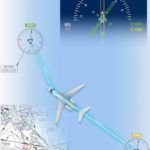
I’m not sure this airspace addition will reduce the risk of a midair collision. In fact, I think it might do just the opposite. While ostensibly protecting airplanes on the instrument approaches to runway 30, it will force non-participating aircraft into a smaller chunk of sky.

I’ve heard they are expecting to implement this change without much, if any, increase in staffing at Socal Approach. Considering the volume of traffic in and around Long Beach, I can only assume Socal will be unable to provide services to aircraft in local practice areas. This will force them down below 2400 feet over the harbor, and below 1500 feet off the Huntington Beach coast. At that altitude, they will be mixing it up with banner towers and helicopters. In addition, lower altitudes equate decreased glide distance for single engine airplanes. So they will stick closer to the coast, causing further congestion.

Transiting aircraft will be forced upward and having to live in the airspace between 3500 and 4900 feet. Should training aircraft elect to fly above the Class C airspace, that will add to the logjam as well.

It’s also worth noting that these are the aircraft which are most likely to be flying without traffic detection equipment.

There are a few other odd things about this proposal. The Los Alamitos class D airspace appears to be reduced to a pie-shaped slice. I’ve not seen that before. The west side of the field will be class C while the east side remains class D.

Speaking of Los Alamitos, I can’t help but wonder how this will affect the Medfly operations in and out of that airfield. Our operations probably contribute to the perceived need for this airspace. We routinely fly in and out of Los Al to the south at 1000′ MSL. We have north/south regions over that area which we fly at 1000′ and/or 2100′. These are standard procedures for us, all of which were designed with ATC’s input and which we fly while talking to them and with their full assent. It may give the airliners an occasional RA (resolution advisory) or two, but I’ve never felt it was in any way unsafe.

There are certainly times when adding airspace is necessary. For example, I wouldn’t mind seeing a class D tower added at Corona. But I’m not sure this Long Beach thing is such a good idea.

I’d be interested to hear from other Socal pilots. What’s your take on this proposal?

Best Paint Scheme Ever

Finally. An airline with a sense of humor!

When is an airline’s livery more than just a bunch of paint? When it makes a buzz on the internet which goes far beyond the likes of aviation geeks like me.

I’d never heard of South African carrier Kulula Airlines until today. And odds are, you hadn’t either. Given the chance, though, I’d fly with them in a heartbeat just based on what’s in these pictures. Typical male response, eh? Only concerned with exterior appearances!

Seriously though, it speaks volumes about Kulula that they set aside the laws of corporate branding long enough to acknowledge the oddity of the aviation lexicon. To the average passenger, it’s undoubtedly an off-putting jumble of terms, acronyms, and abbreviations. They acknowledge this, and do it with a sense of humor which will bring a smile to neophytes and veterans alike.

Most American carriers wouldn’t have the chutzpah to green light this sort of thing. They tend see the exterior spaces of an airliner fuselage as a place to sell advertising to the highest bidder. I’ve seen theme parks, NBA basketball franchises, states, magazines, and other entities advertised. Perhaps it’s part of the financial equation and simply a necessity to keep the airline profitable.

Whatever the reason, I salute Kulula. Perhaps there’s a moral here: putting the fun and enjoyment back into aviation can help the bottom line, too. Here’s hoping “Flying 101″ is viral enough to bring some of that thinking up to our hemisphere.

Flying 101, indeed!

Look, it's a flying aviation dictionary...

Junk In, Junk Out

The introduction of computerized displays (also known as “glass panels”, or in the FAA’s parlance, Technologically Advanced Aircraft or “TAA”) into general aviation cockpits can mean serious consequences for those unprepared to deal with the complexities involved.

Sure, there’s a lot of power and capability present in those computers. They can provide you with wind speed and direction, beautiful color moving maps, an entire continent worth of aeronautical data, and so much more. Terrain databases, traffic alerts, sophisticated autopilots, GPS roll steering, highway-in-the-sky, and so much more. Things we probably haven’t even though of yet.

Amazing stuff. Of course, it can be a bit daunting for those who haven’t reached a particular skill level with the glass. Information overload is common, even in experienced pilots. I see this a lot in the latest generation of G1000 panels; there is so much information on the Primary Flight Display that it can get overwhelming.

As always, the weakest link in the cockpit is usually the guy flying the plane. One thing pilots of all experience levels have to watch for is what I call the “junk in, junk out” syndrome. The computers will do exactly what you tell them to do. If, for example, you input SLI as a waypoint and aren’t careful, you can end up going to South American instead of Seal Beach, because there is an identically named navaid on that continent. All it takes is a wrong button push and poof!, you’re on your way.

This kind of thing is common with intersections because they use five letters. Key in DRIFT instead of DRIFY and you’ll end up east of Philadelphia instead of south of Long Beach, CA.

I’ve done this several times myself. The only way to prevent it is to double check that the courses and distances make sense.

Computers have the ability to smooth and simplify our lives. They also have the ability to cause major problems. Anyone who has ever cc:’d an email to the wrong person(s) can tell you about that.

In aviation, they can cause funny things to happen even outside the cockpit. Here’s one such example: a friend of mine runs a well-known aviation weather site, and his system choked on an odd identifier. Turns out someone at the FAA cut-and-paste into the wrong window, and his laundry list of personal tasks ended up in the FAA’s international NOTAM system.

You’ve gotta see this NOTAM that popped up a couple of weeks ago, and it just tripped up our decoder today…

This is for ICAO identifier “MIKE” — which as far as I can tell is just a guy named Mike!! :-)

Wish this was just a joke, but it’s actually in the FAA’s international NOTAM system!!!!!

0014/09 – 0014 NOTAMR 0009 0013 A) MIKE PART 1 OF 2 B) WIE C) UFN E)

THINGS TO DO LIST IN NOVEMBER 2009 AT:
1607 JAMES ISLAND AVE., N.M.B.
BRING: MESUREMENTS OF: OUR BEDROOM SET, ETC.
TURN ON THE HEAT VICE A/C.
MASTER BATHROOM/KITCHEN PAINT: CLOSET/WINDOW MOULDING.

I OWE JOE/JOE FOR PALM FERTILIZER/TRIMMING, IF DONE??
BUY: GRILL, PRESSURE WASHER AT LOWE’S (NMB), NEXT SPRING (2010).
10 AZALEAS, OR FLOWERS (NMB), NEXT SPRING (2010).
CURTAIN ROD FOR UP-STAIRS BATHROOM??

TO DO: ME, HANDY-ANDY, PAINTER??
STAIN/OR WAX BANNISTER?
SPARE BEDROOM: PAINT INSIDE TRIM IN CLOSET.
CLEAN UP THE PLANT IN THE GARAGE, NEXT SPRING (2010).
FERTILIZE LAWN/PLANTS, NEXT SPRING (2010).
HANDY ANDY, NEXT SPRING (2010).

(ED) CAULK/PAINT OUTSIDE WHERE NEEDED.
INSTALL SHELVING IN ALL UPSTAIRS CLOSETS.
RE-HANG BALCONY DOOR LIGHT FIXTURES.
LAUNDRY ROOM: INSTALL CABINET/SHELF ABOVE.
CLEAN OUT THE GARAGE DOORS: BRAD/BRADY, CHRIS DOORMAN.

(AUGUST 09)
CALL EXTERMINATOR FOR APPMT: 843-365-5120 (CONWAY PEST CONTROL)
CALL A/C TECHNICAN FOR SEPT. CK ON HEAT PUMPS, NEXT SPRING (2010).

You’ve gotta admire the guy’s level of organization. His home sounds lovely. Now if he could just do something about those “fat fingers”…

Bird Strike

As I mentioned in my last post, some captain upgrades and new hires are finally appearing at Dynamic.

For the past year and a half, things had been completely static. I was one of the last people to upgrade to the left seat, and those who were stuck as first officers eventually started to get discouraged. It’s hard to blame them. They work extremely hard for $11 an hour (yeah, you read that right) day in and day out. Thankfully, for those who stuck around, their patience has begun to pay off. And for those who haven’t upgraded yet, at least they see some light at the end of the tunnel.

The down side to this is that I have lost some of my favorite first officers. I’m glad they’ve upgraded, but today I started to realize how much I’d come to rely on their experience, not to mention the fun factor of flying with them. Then again, I get to play a part in the training of some upcoming pilots, and that’s pretty neat too.

Today I was flying with one of the “new guys”. It was an atypical day because I clocked in at 6:00 a.m. I normally get an early start, but not THAT early. We were cranking at that hour because a ceremony would be taking place later in the day to honor a soldier whose body was being returned home from Afghanistan. During the ceremony, which was to occur in the middle of our work day, the base would be on “quiet hours”, meaning no aircraft operations were permitted.

My first officer and I had taxied out to the runway for our second flight. We lined up, completed our final checks, set power, and released the brakes. Everything was normal for a few seconds. Then, as we accelerated down the runway, a very large hawk came into view. He was sitting in the middle of the runway with his back to us, wings folded majestically. He didn’t seem to be doing anything special, just sitting there.

My FO (who has only a few flights under his belt in the BE90) asked if he should abort. I said no. My feeling about birds is that they generally get out of the way. Those that don’t are not going to be avoided by maneuvering, especially in something the size of a King Air. It’s akin to a scuba diver trying to out-swim a sea lion under water. We move at a comparatively glacial pace, and if they want to avoid us, they can jink and jank in ways we can only dream of.

And in this case, I don’t think we could have stopped in time anyway, even with full reverse and hard braking. I’d rather hit the bird than try and steer around it in a 10,000 lb. King Air and end up veering off the runway.

We seem to hit birds fairly frequently at Los Alamitos. The base — along with the adjacent Seal Beach Naval Weapons Station — is some of the last open space in the area, and it attracts a lot of wildlife. Now as to why the wildlife that flies seems to enjoy hanging out around the runway, you got me.

So as I mentioned, the hawk was sitting on the runway centerline with his back to us. I’m sure he knew we were coming. A King Air with the props turning at 2200 RPM is pretty loud. Plus we have two alternating flashing landing lights on each wingtip and another one on the nose gear. In fact, I know the bird saw us coming, because he actually turned his head 90 degrees and looked at us as we approached!

By now you’ve probably guessed the hawk elected to make a stand against the five-ton turboprop, and in the words of the Knight Templar, he chose… poorly. We heard a distinctive thump as the half of the hawk which wasn’t left on the runway hit the right main landing gear leg.

We rotated, the FO called for gear retraction, and I selected… nothing. The gear handle wouldn’t move. So I pushed the downlock override, selected gear up, and was rewarded with red lights, warning horn, and no gear movement. Mmm-hmmm. I lowered the gear handle and immediately got three green lights. Down and locked.

Remembering rule #1 (always fly the plane), I elected to monitor the FO as he flew and ignore the gear until we could get to a higher altitude. Once off the coast, I briefed the FO: he would focus on flying the airplane and look for traffic; I would troubleshoot the gear and handle the radios.

There were no indications of blown circuit breakers or other failures. No reason to pump the gear manually, it was already down. There is a checklist for failure to extend, but nothing for a failure to retract. I suspected that the bird strike had done something to the squat switch, because the aircraft was reacting like I had raised the landing gear lever with the plane sitting on the ground.

I called our maintenance shop and after a few queries, they said that if it was definitely down and locked, leave it that way and return. So that’s what we did. I elected to make a fly-by of the tower just to have them look at that right gear leg and see if there was any obvious sign of damage, flat tire, or other abnormality. They didn’t see anything amiss, so we returned and landed uneventfully. Well, aside from the trail of emergency vehicles which followed us to the ramp.

We moved our load to another aircraft and had an uneventful flight. At the end of the day, I got with the mechanic who put our broken bird up on jacks, and what they found was that the hawk had bent part of the squat switch — a device which detects when the airplane’s weight comes off the wheels — in such a way that it was locked in place and always thought the plane was on the ground. An easy fix. And they also found the hawk on the runway. Or should I say, half of it. Apparently our prop cut the bird cleanly in half.

What I learned today (or should I say, re-learned) is that rule #1 really works. Fly the airplane, no matter what. When something goes wrong, there’s often an irresistible urge to do something, fix something, check for that breaker, try the gear retraction juuuuust one more time. In a busy terminal area when you’re low to the ground with the extra drag of the landing gear reducing your climb rate and a brand new low-time first officer flying the airplane, the best course of action is frequently to ignore the problem and just fly.


Switch to our mobile site