FAA Proposes Class D Airspace at LAX

FAA Proposes Class D Airspace at LAX

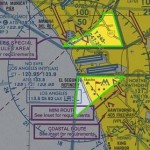
As Andrew Jackson said during his farewell address to the country, “the price of liberty is eternal vigilance”. Nowhere is this more true than when dealing with our freedom to fly. Thankfully we’ve got organizations like AOPA to help monitor the reams of NPRMs and documents issued by the federal government on a daily basis. I say thankfully because as connected as I am to the industry, there’s no way I could keep up with the blizzard of paperwork flying out of Washington. It’s hard to remember how we did it even half as well before the advent of the world wide web. AOPA recently found a proposed change to the Los Angeles Class B airspace. This change isn’t a physically large one, and it won’t have much if any impact for...

Read More

Long Beach Class C Airspace Proposal

Well, here it is: the long-awaited details of the FAA’s proposed addition of Class C airspace to Long Beach: I’m not sure this airspace addition will reduce the risk of a midair collision. In fact, I think it might do just the opposite. While ostensibly protecting airplanes on the instrument approaches to runway 30, it will force non-participating aircraft into a smaller chunk of sky. I’ve heard they are expecting to implement this change without much, if any, increase in staffing at Socal Approach. Considering the volume of traffic in and around Long Beach, I can only assume Socal will be unable to provide services to aircraft in local practice areas. This will force them down below 2400 feet over the harbor, and below 1500 feet off the...

Read More

MOA Flying

There are many types of “special use” airspace out there. One of the most prevalent is a Military Operations Area, or MOA. According to the Aeronautical Information Manual (Sec. 3-4-5): a. MOAs consist of airspace of defined vertical and lateral limits established for the purpose of separating certain military training activities from IFR traffic. Whenever a MOA is being used, nonparticipating IFR traffic may be cleared through a MOA if IFR separation can be provided by ATC. Otherwise, ATC will reroute or restrict nonparticipating IFR traffic. b. Examples of activities conducted in MOAs include, but are not limited to: air combat tactics, air intercepts, aerobatics, formation training, and low-altitude tactics. Military pilots flying in an active MOA...

Read More