Circle-to-Land Complications
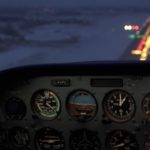
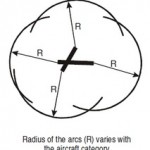
If I asked you to ponder the most pucker-inducing aspect of instrument flying, what would come to mind? An icing encounter? Circumventing imbedded thunderstorms? Hand flying that approach to minimums? An instrument failure? Those are all good answers, but for me the one that takes the cake is a low-visibility circle-to-land maneuver to an unfamiliar airport at night. If you’re not an instrument-rated pilot, you might not be familiar with this. The need for circling comes from situations where the weather is poor and the runway most associated with the approach is not suitable for landing. This could be due to unfavorable winds, runway construction, insufficient runway length, or any one of a dozen different reasons. Some approaches are simply not aligned...
Read MoreClimb/Descend Via
I was recently in Arizona for a 135.293 oral exam with the FAA and learned that the local FSDO has been seeing quite a few pilot deviations due to misunderstandings about the appropriate altitudes to fly when given a “climb/descend via” departure/arrival procedure. To be honest, until I started flying internationally, it was somewhat rare to encounter a “descend via” instruction. It seems more common in Europe, probably because many domestic STARs contain “expect” altitude restrictions, and ATC is specifically prohibited from giving descend-via instructions on those procedures. (It’s also worth noting that pilots are not expected to comply with published “expect” restrictions in the event of lost communications, unless...
Read MoreBetter or Worse?
That’s what my optomotrist is always asking me as I peer through the phoropter during my annual eye exam. It’s also what I ask myself in the never-ending battle which pits two schools of thought against one another on the state of general aviation in the United States. On one shoulder stands a little guy who points out how flying is becoming less accessible due to escalating costs and regulatory burdens. He says, look at the number of active pilot falling each year, see how airports have become unwelcoming barbed wire fortresses, and notice how even the best primary flight schools are struggling just to survive. His nemesis on the other shoulder, however, points out things like this article heralding the availability of a instrument rating for French...
Read MoreAre Needle, Ball, and Airspeed Obsolete?
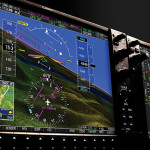
With the advent of the Glass Age, I’ve been seeing more and more pilots question the need for traditional needle/ball/airspeed instrument skills. Why bother to learn the technology of yesterday, they ask? On the surface, this question makes sense. After all, who even manufactures aircraft with non-glass panels anymore? Heck, even the venerable Legend Cub is being built with a Dynon D10A these days. At my home field, we have a Waco UPF-7 (a 1930′s era open-cockpit biplane) with a Garmin glass panel. It looks more like you’re sitting on the bridge of the starship Enterprise than in a barnstormer ready to dust crops. There’s no doubt that glass panels have fewer insidious failure modes than analog instruments. Instead of an attitude indicator...
Read MoreI Love Days Like This
It’s so rare to get true winter weather here in Southern California. But as Lesley always says, it never fails to rain on opening night, and last night was no exception. Boy did it pour! I nearly broke into a Gene Kelly-esque dance all the way down Avenue of the Arts as I made my way to OCPAC for the opening night performance of Die Zauberflöte. Ave. of the Arts even has the right kind of street lights for it! But there’s something about the ultra-modern look of the theaters which kept me from indulging myself. (Note: I may also have been concerned about looking stupid, although that’s never stopped me before). I’ve been making quite a few flights to northern California lately, and this weather has certainly made that part of my day job...
Read MoreProblems at Socal Approach
What on earth is going on at Socal Approach these days? It seems every time I fly, they find a new way to confuse, infuriate, or disappoint me. Sometimes all three. It really pains me to say that, because my cousin was an air traffic controller and I have the utmost respect for ATC. Hell, when I was a kid, I used to hang out at Anchorage Center’s facility on Elmendorf AFB. It’s not easy controlling traffic in the Los Angeles area. They are beset with personnel shortages, a plethora of trainees, a dysfunctional relationship with FAA management, and high levels of traffic. I try to help them out as much as possible. Speaking clearly, eliminating excess verbiage, being patient when they’re busy. But a guy can only take so much, and in my experience...
Read MoreCharts: Are They Required?
If I had a “frequently asked questions” list for glass panels, the first question on the list would probably be: “is it legal to fly with electronic charts alone (ie. no paper on board)?”. Without exception, every person I’ve flown with in an Entegra or G1000 equipped aircraft has made this inquiry. My response has always been that while it’s not a wise idea to fly without paper since an electrical component failure could render your whole charting system inoperative, from a legal standpoint, electronic charts are acceptable as a substitute. Get caught above the stratus without your approach plates? If you have the electronic charts, go ahead and do the approach. In fact, as far as I know there is no legal requirement to carry...
Read MoreAviation Memorabilia
In lieu of Aviatrix’s recent post on navigation, I thought it might be worthwhile to post these World War II era approach plates. We have a few mid-40s sectional charts of the west coast hanging on the walls at Sunrise — in mind condition, no less — but they’re behind glass and would be tough to scan. I always find these artifacts fascinating to study. These plates are not that different from what we use today. Charted plan and elevation views of the approach procedure on the front, and textual descriptions on the back. I guess the major difference is that the Washington, D.C. approach procedure uses the ancient four-course A/N audio navigation system. I love historical aviation material. Charts. Logbooks. Manuals. Speaking of...
Read More


Social