Junk In, Junk Out

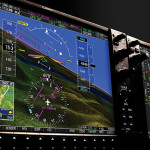
The introduction of computerized displays (also known as “glass panels”, or in the FAA’s parlance, Technologically Advanced Aircraft or “TAA”) into general aviation cockpits can mean serious consequences for those unprepared to deal with the complexities involved.

Sure, there’s a lot of power and capability present in those computers. They can provide you with wind speed and direction, beautiful color moving maps, an entire continent worth of aeronautical data, and so much more. Terrain databases, traffic alerts, sophisticated autopilots, GPS roll steering, highway-in-the-sky, and so much more. Things we probably haven’t even though of yet.

Amazing stuff. Of course, it can be a bit daunting for those who haven’t reached a particular skill level with the glass. Information overload is common, even in experienced pilots. I see this a lot in the latest generation of G1000 panels; there is so much information on the Primary Flight Display that it can get overwhelming.

As always, the weakest link in the cockpit is usually the guy flying the plane. One thing pilots of all experience levels have to watch for is what I call the “junk in, junk out” syndrome. The computers will do exactly what you tell them to do. If, for example, you input SLI as a waypoint and aren’t careful, you can end up going to South American instead of Seal Beach, because there is an identically named navaid on that continent. All it takes is a wrong button push and poof!, you’re on your way.

This kind of thing is common with intersections because they use five letters. Key in DRIFT instead of DRIFY and you’ll end up east of Philadelphia instead of south of Long Beach, CA.

I’ve done this several times myself. The only way to prevent it is to double check that the courses and distances make sense.

Computers have the ability to smooth and simplify our lives. They also have the ability to cause major problems. Anyone who has ever cc:’d an email to the wrong person(s) can tell you about that.

In aviation, they can cause funny things to happen even outside the cockpit. Here’s one such example: a friend of mine runs a well-known aviation weather site, and his system choked on an odd identifier. Turns out someone at the FAA cut-and-paste into the wrong window, and his laundry list of personal tasks ended up in the FAA’s international NOTAM system.

You’ve gotta see this NOTAM that popped up a couple of weeks ago, and it just tripped up our decoder today…

This is for ICAO identifier “MIKE” — which as far as I can tell is just a guy named Mike!! :-)

Wish this was just a joke, but it’s actually in the FAA’s international NOTAM system!!!!!

0014/09 – 0014 NOTAMR 0009 0013 A) MIKE PART 1 OF 2 B) WIE C) UFN E)

THINGS TO DO LIST IN NOVEMBER 2009 AT:
1607 JAMES ISLAND AVE., N.M.B.
BRING: MESUREMENTS OF: OUR BEDROOM SET, ETC.
TURN ON THE HEAT VICE A/C.
MASTER BATHROOM/KITCHEN PAINT: CLOSET/WINDOW MOULDING.

I OWE JOE/JOE FOR PALM FERTILIZER/TRIMMING, IF DONE??
BUY: GRILL, PRESSURE WASHER AT LOWE’S (NMB), NEXT SPRING (2010).
10 AZALEAS, OR FLOWERS (NMB), NEXT SPRING (2010).
CURTAIN ROD FOR UP-STAIRS BATHROOM??

TO DO: ME, HANDY-ANDY, PAINTER??
STAIN/OR WAX BANNISTER?
SPARE BEDROOM: PAINT INSIDE TRIM IN CLOSET.
CLEAN UP THE PLANT IN THE GARAGE, NEXT SPRING (2010).
FERTILIZE LAWN/PLANTS, NEXT SPRING (2010).
HANDY ANDY, NEXT SPRING (2010).

(ED) CAULK/PAINT OUTSIDE WHERE NEEDED.
INSTALL SHELVING IN ALL UPSTAIRS CLOSETS.
RE-HANG BALCONY DOOR LIGHT FIXTURES.
LAUNDRY ROOM: INSTALL CABINET/SHELF ABOVE.
CLEAN OUT THE GARAGE DOORS: BRAD/BRADY, CHRIS DOORMAN.

(AUGUST 09)
CALL EXTERMINATOR FOR APPMT: 843-365-5120 (CONWAY PEST CONTROL)
CALL A/C TECHNICAN FOR SEPT. CK ON HEAT PUMPS, NEXT SPRING (2010).

You’ve gotta admire the guy’s level of organization. His home sounds lovely. Now if he could just do something about those “fat fingers”…

Are Needle, Ball, and Airspeed Obsolete?

With the advent of the Glass Age, I’ve been seeing more and more pilots question the need for traditional needle/ball/airspeed instrument skills. Why bother to learn the technology of yesterday, they ask?

On the surface, this question makes sense. After all, who even manufactures aircraft with non-glass panels anymore? Heck, even the venerable Legend Cub is being built with a Dynon D10A these days. At my home field, we have a Waco UPF-7 (a 1930′s era open-cockpit biplane) with a Garmin glass panel. It looks more like you’re sitting on the bridge of the starship Enterprise than in a barnstormer ready to dust crops.

There’s no doubt that glass panels have fewer insidious failure modes than analog instruments. Instead of an attitude indicator that slowly rolls over (possibly taking the pilot with it), you get a giant red “X” leaving no doubt about the quality of the AHRS data.

And, lest we forget, many of the pilots who balk at an six-pack instrument panel probably don’t see one that often. They fly newer airframes, experimentals, turbines, and read industry publications that rarely even show a non-glass instrument panel. Out of sight, out of mind. So the question is a good one, but my answer may surprise you.

In my opinion, the traditional analog instruments are not obsolete, if only by virtue of the fact that out of the 200,000+ GA aircraft in existence, probably 90% of them have the older style panel. These airplanes are mostly certificated in the Normal category, and it would be neither cost effective or legally possible to put newer style instrument panels into those aircraft at the present time.

Of course, if you have an RV-X and only plan on flying that airplane and it’s got glass and you can fly it proficiently (including partial-panel, whatever that may look like in your ship), then there is no need to be able to fly with a turn coordinator, altimeter, and airspeed indicator.

On the other hand, when I train students to fly IFR in glass airplanes like the SR22 and Columbia, I ensure they can fly a traditional six pack as well via simulator training. There are several reasons for this:

  • I want them to be a complete instrument pilot able to fly more than just an Avidyne or G1000
  • Second, I want them to understand the way analog instruments work since there are analog instruments even in those glass aircraft, and they have different failure modes and different scans than an AHRS-based system
  • Third, it’s harder to go “back” to analog instruments than it is to go “forward” to glass panels if you’re already a rated and experienced pilot, so I want the heavy lifting to be done while we’re already doing the heavy lifting: during primary instrument training.

I disagree with those who feel instructors are anti-GPS, anti-glass, attached to older technology, or provide unrealistic failure modes for no good reason. I know none who have that attitude. On the other hand, we often turn those devices off or direct a student’s focus elsewhere because it’s necessary for training. If we don’t push your workload to the breaking point, fail instruments and radios, etc. then we’re not doing our job.

Anyone can fly IFR when everything’s working. I’ve seen pilots who aren’t even instrument trained do it. But when you’re on one engine or partial panel in the clouds, a passenger is airsick, you need a bathroom break, the fuel is getting low, it’s night, and you’re tired, that’s not the time to find out how well you perform when stress is high. That’s why we push you hard. If you ever have a bad day and come out the other side in one piece, you’ll understand that.


Switch to our mobile site